

25. Feb. 2010
WASHINGTON - Securities regulators adopted a new rule to restrict short selling more than a year after the financial crisis provoked cries to rein in investors who bet on a stock's decline.
The Securities and Exchange Commission voted 3-2 on Wednesday for a rule designed in part to boost investor confidence by braking the precipitous fall of a stock.
The SEC did not exempt option and equity market makers from the curb but said hedging could still occur.
The new rule attempts to bridge the divide between lawmakers and companies who argued a market-wide curb on all short selling was needed, and traders who said that any restrictions would hurt market liquidity.
Under the SEC's rule, if a stock fell by more than 10 percent in a day, a curb would kick in, allowing short selling only above the national best bid.
"The commission was cognizant of the benefits that short selling can provide to the markets," SEC Chairman Mary Schapiro said at a public agency meeting.
However, Schapiro said the SEC was also concerned that excessive downward pressure, accompanied by fear of unconstrained short selling, could destabilize markets and undermine investor confidence.
The SEC's action drew a quick rebuke from famed short seller James Chanos, who said the restrictions would harm investors' interests by driving up transaction costs.
Phillip Goldstein, a hedge fund manager known for a landmark lawsuit that rolled back the SEC's rights to supervise hedge funds, said, "This is a sign that the commissioners who voted for the new rule don't really believe in the free market."
Under the new rule, the restriction would last for the day the stock dropped and the day after.
Short sellers bet on a stock's decline. In a short sale, an investor borrows stock and sells it in the hope that its price will drop. When it does, the seller profits by buying back the stock at the lower price and returning the borrowed shares.
REPUBLICANS DISSENT
During the worst of the financial crisis, lawmakers and companies begged the SEC to clamp down on the short sellers and said the uptick rule should be reinstated.
First adopted after the 1929 market crash, the uptick rule allowed shorting only if the last sale price was higher than the previous price. But the SEC abolished it in 2007 after concluding that it was no longer effective in modern markets.
Democratic SEC Commissioner Luis Aguilar said investor trust in a fair and orderly market was essential to the operation of capital markets. "It would be a mistake to undervalue this trust because we cannot assign a dollar figure to it," he said.
The two Republican commissioners, Kathleen Casey and Troy Paredes, dissented and said there was no firm foundation for adopting the new short sale rule.
Paredes said there was no way to know whether implementation of the rule would boost investor confidence. "Human psychology is difficult to predict," he said.
Casey suggested that those who have been clamoring for the old uptick rule will not be satisfied until the SEC reinstated the Depression-era rule.
Casey and Paredes both raised concerns over potential compliance costs that are estimated to be in the billions of dollars. The SEC estimates that it will cost the average broker dealer or trading center at least $70,000 to comply with the new rule and about $120,000 for annual upkeep.
The new SEC rule goes into effect 60 days after it is published in the government's official federal register. The market will then have six months to comply with requirements.
[Reuters]
Showing posts with label USA. Show all posts
Showing posts with label USA. Show all posts
Carlyle says China top spot for Asian deals
25. Feb. 2010
HONG KONG - The Carlyle Group CYL.UL aims to invest most of its Asia-focused funds on deals in China, where the U.S. buyout group also expects to finance new funds as it gets tougher to raise money in the United States.
"There's no doubt that raising money is harder than it used to be," said David Rubenstein, Carlyle's co-founder and managing director.
"There's no doubt that some of the public pension funds in the United States are probably over-allocated to private equity," he told Reuters in a telephone interview on Wednesday.
Some private equity executives have complained about difficulties in fund-raising in the United States and Europe, where institutional investors, also known as limited partners, used to be big fans of private equity before the financial crisis.
More fund managers, such as George Soros, are rushing to raise new capital in Asia, which has a shorter history of private equity and hedge funds than the West.
Carlyle's most recent Asia buyout fund, launched in July 2006, raised $1.8 billion and has invested in various projects across Asia.
Carlyle was raising a new Asia buyout fund with a target size of up to $3 billion, Reuters reported in September.
"Clearly, China has a fair amount of money to invest, not only through the large sovereign wealth funds that are well known, but from so many other vehicles in China," he said.
"So I think China and other parts of Asia like Singapore and Korea are going to be very attractive places in which to raise money for organizations like ours generally."
MORE CHINA FUNDS
Rubenstein, who was ranked by Forbes magazine as the 123rd richest American in 2009 with a net worth of $2.5 billion, told Reuters investors continue to have a strong interest in investment opportunities in China despite the financial crisis.
"We do invest outside China as well, of course, but China will get a predominant share of the money that we have for Asia because it's so much larger and it's such an exciting place to invest," said Rubenstein.
In China, Carlyle has already made about 50 transactions worth a combined total of more than $2 billion.
One of its most successful investments in the region was its landmark deal with China Pacific Insurance (Group) Co (601601.SS) (2601.HK), China's No.3 life insurer, which went public in Hong Kong late last year, allowing Carlyle to sell part of its stake for a huge profit. However, Carlyle has a one-year lock-up period since China Pacific's listing in December.
"When we do try to raise money to invest in Asia, I would say 75 percent of the interest from our investors is here about China," said Rubenstein, who was a top domestic policy advisor to former U.S. President Jimmy Carter.
"China is the area (in Asia) that most of our investors are interested in ... and so that's what we do talk a lot about," he said.
Carlyle said also said on Wednesday it was teaming up with China's largest non-state-owned conglomerate Fosun Group to launch a $100 million yuan-denominated private equity fund to tap more China deals.
Carlyle said in January it plans to launch a China-dedicated, yuan-denominated private equity in Beijing.
"We may be able to finish the fund-raising for the yuan fund set up in Beijing by the end of this year, or may be faster, but we don't have a target for the fund size," said Rubenstein.
Carlyle's rival Blackstone Group (BX.N) aims to raise 5 billion yuan ($732.5 million) for its first local yuan fund in Shanghai. Chinese media reported Carlyle might raise a similar amount of money for its Beijing fund.
($1=6.826 Yuan)
[Reuters]
HONG KONG - The Carlyle Group CYL.UL aims to invest most of its Asia-focused funds on deals in China, where the U.S. buyout group also expects to finance new funds as it gets tougher to raise money in the United States.
"There's no doubt that raising money is harder than it used to be," said David Rubenstein, Carlyle's co-founder and managing director.
"There's no doubt that some of the public pension funds in the United States are probably over-allocated to private equity," he told Reuters in a telephone interview on Wednesday.
Some private equity executives have complained about difficulties in fund-raising in the United States and Europe, where institutional investors, also known as limited partners, used to be big fans of private equity before the financial crisis.
More fund managers, such as George Soros, are rushing to raise new capital in Asia, which has a shorter history of private equity and hedge funds than the West.
Carlyle's most recent Asia buyout fund, launched in July 2006, raised $1.8 billion and has invested in various projects across Asia.
Carlyle was raising a new Asia buyout fund with a target size of up to $3 billion, Reuters reported in September.
"Clearly, China has a fair amount of money to invest, not only through the large sovereign wealth funds that are well known, but from so many other vehicles in China," he said.
"So I think China and other parts of Asia like Singapore and Korea are going to be very attractive places in which to raise money for organizations like ours generally."
MORE CHINA FUNDS
Rubenstein, who was ranked by Forbes magazine as the 123rd richest American in 2009 with a net worth of $2.5 billion, told Reuters investors continue to have a strong interest in investment opportunities in China despite the financial crisis.
"We do invest outside China as well, of course, but China will get a predominant share of the money that we have for Asia because it's so much larger and it's such an exciting place to invest," said Rubenstein.
In China, Carlyle has already made about 50 transactions worth a combined total of more than $2 billion.
One of its most successful investments in the region was its landmark deal with China Pacific Insurance (Group) Co (601601.SS) (2601.HK), China's No.3 life insurer, which went public in Hong Kong late last year, allowing Carlyle to sell part of its stake for a huge profit. However, Carlyle has a one-year lock-up period since China Pacific's listing in December.
"When we do try to raise money to invest in Asia, I would say 75 percent of the interest from our investors is here about China," said Rubenstein, who was a top domestic policy advisor to former U.S. President Jimmy Carter.
"China is the area (in Asia) that most of our investors are interested in ... and so that's what we do talk a lot about," he said.
Carlyle said also said on Wednesday it was teaming up with China's largest non-state-owned conglomerate Fosun Group to launch a $100 million yuan-denominated private equity fund to tap more China deals.
Carlyle said in January it plans to launch a China-dedicated, yuan-denominated private equity in Beijing.
"We may be able to finish the fund-raising for the yuan fund set up in Beijing by the end of this year, or may be faster, but we don't have a target for the fund size," said Rubenstein.
Carlyle's rival Blackstone Group (BX.N) aims to raise 5 billion yuan ($732.5 million) for its first local yuan fund in Shanghai. Chinese media reported Carlyle might raise a similar amount of money for its Beijing fund.
($1=6.826 Yuan)
[Reuters]


Exclusive: U.S. business investment continues to drop
24. Feb. 2010
CHICAGO - U.S. businesses continued to postpone financing new investments in their operations in January, but delinquencies among existing borrowers stabilized and outright defaults fell, according to a trade group for lenders that finance half the capital equipment investment in the United States.
The Equipment Leasing and Finance Association told Reuters that the overall volume of financings used to fund equipment acquisitions fell to $3.4 billion in January, down 24.4 percent from last January and down 52 percent from the previous month.
But other measures tracked by ELFA suggested businesses were finding it a little easier to remain current on their existing loans.
ELFA said the percentage of borrowers delinquent 30 days or more on their capital spending loans, leases or lines of credit was 4.3 percent in January, unchanged from December but up from 4.0 percent last year. Those delinquencies peaked in September 2009 at 5.6 percent of total receivables.
Charge-offs, or the percentage of receivables the lenders considered uncollectable fell for a second straight month to 1.68 percent in January, down from 2.08 percent in December but up from 1.41 percent last year. Those losses also peaked last September at a little over 3 percent of total capital spending receivables.
"Most companies remain reluctant to invest in new capital equipment without further signs of a true economic recovery," said Jud Snyder, the president of M+I Equipment Finance Co in Milwaukee and a member of ELFA.
Snyder said a continued rise in credit approvals -- they reached 70.9 percent in January, according to ELFA, their highest level since October 2008 -- was another bright sign that, taken with the stabilization of portfolio quality, suggested a distant light at the end of a long tunnel.
"It's early," Snyder said, "but hopefully these are trends that point to the start of a new economic growth cycle."
ELFA's report, provided to Reuters on Tuesday, a day ahead of its official release, underscored the tentative nature of the current recovery from the recession, which has been marked by a sharp and prolonged pullback in business spending.
Also on Tuesday, the Conference Board said that U.S. consumer confidence fell in February to its lowest level in 10 months and the Standard & Poor's/Case-Shiller index showed U.S. home prices unexpectedly slipped in December.
ELFA's members include Bank of America Corp (BAC.N), Canon Inc's (7751.T) Canon Financial Services, Caterpillar Inc's (CAT.N) Caterpillar Financial Services Corp, CIT Group Inc (CIT.N), Dell Inc's (DELL.O) Dell Financial Services, Deere & Co's (DE.N) John Deere Credit Corp, Siemens AG's (SIEGn.DE)Siemens Financial Services and Verizon Communications Inc's (VZ.N) Verizon Capital Corp.
More than half the money invested in plants, equipment and software in the United States in any given year is financed with loans, leases and lines of credit.
[Reuters]
CHICAGO - U.S. businesses continued to postpone financing new investments in their operations in January, but delinquencies among existing borrowers stabilized and outright defaults fell, according to a trade group for lenders that finance half the capital equipment investment in the United States.
The Equipment Leasing and Finance Association told Reuters that the overall volume of financings used to fund equipment acquisitions fell to $3.4 billion in January, down 24.4 percent from last January and down 52 percent from the previous month.
But other measures tracked by ELFA suggested businesses were finding it a little easier to remain current on their existing loans.
ELFA said the percentage of borrowers delinquent 30 days or more on their capital spending loans, leases or lines of credit was 4.3 percent in January, unchanged from December but up from 4.0 percent last year. Those delinquencies peaked in September 2009 at 5.6 percent of total receivables.
Charge-offs, or the percentage of receivables the lenders considered uncollectable fell for a second straight month to 1.68 percent in January, down from 2.08 percent in December but up from 1.41 percent last year. Those losses also peaked last September at a little over 3 percent of total capital spending receivables.
"Most companies remain reluctant to invest in new capital equipment without further signs of a true economic recovery," said Jud Snyder, the president of M+I Equipment Finance Co in Milwaukee and a member of ELFA.
Snyder said a continued rise in credit approvals -- they reached 70.9 percent in January, according to ELFA, their highest level since October 2008 -- was another bright sign that, taken with the stabilization of portfolio quality, suggested a distant light at the end of a long tunnel.
"It's early," Snyder said, "but hopefully these are trends that point to the start of a new economic growth cycle."
ELFA's report, provided to Reuters on Tuesday, a day ahead of its official release, underscored the tentative nature of the current recovery from the recession, which has been marked by a sharp and prolonged pullback in business spending.
Also on Tuesday, the Conference Board said that U.S. consumer confidence fell in February to its lowest level in 10 months and the Standard & Poor's/Case-Shiller index showed U.S. home prices unexpectedly slipped in December.
ELFA's members include Bank of America Corp (BAC.N), Canon Inc's (7751.T) Canon Financial Services, Caterpillar Inc's (CAT.N) Caterpillar Financial Services Corp, CIT Group Inc (CIT.N), Dell Inc's (DELL.O) Dell Financial Services, Deere & Co's (DE.N) John Deere Credit Corp, Siemens AG's (SIEGn.DE)Siemens Financial Services and Verizon Communications Inc's (VZ.N) Verizon Capital Corp.
More than half the money invested in plants, equipment and software in the United States in any given year is financed with loans, leases and lines of credit.
[Reuters]
Greenspan: U.S. recovery "extremely unbalanced"
24. Feb. 2010
WASHINGTON - Former Federal Reserve Chairman Alan Greenspan said on Tuesday the U.S. economic recovery was "extremely unbalanced," driven largely by high earners benefiting from recovering stock markets and large corporations.
Small businesses and the jobless are still suffering from the aftermath of a credit crunch that was "by far the greatest financial crisis, globally, ever" -- including the 1930s Great Depression, said Greenspan in an address to a Credit Union National Association conference.
"It's really an extraordinarily unbalanced system because we're dealing with small businesses who are doing badly, small banks in trouble, and of course there is an extraordinarily large proportion of the unemployed in this country who have been out of work for more than six months and many more than a year," said Greenspan, who headed the Fed from 1987 to 2006.
With both housing starts and auto sales "dead in the water," he said he thought it would be difficult to make the case that the economy is poised for a strong rebound.
Greenspan did see signs pointing toward a modest recovery in job creation, saying that staffing levels at U.S. firms, which were deeply cut, remain below what is sustainable in the long run. But unemployment rate could still remain stubbornly high.
"The reason why the unemployment rate is going to be sticky is that as soon as employment starts picking up, a lot of the people who have not been seeking jobs are going to come back into the labor force, and they will keep the official unemployment rate in the 9 percent area, something like that," Greenspan said.
He also said it was important for U.S. policy makers to prevent perceived expectations of inflation that could push up yields on long-term U.S. Treasury securities, which would raise mortgage interest rates and prevent a recovery in the housing market.
The 10-year Treasury yield is the "one statistic that I watch every morning and every afternoon," he said.
[Reuters]
WASHINGTON - Former Federal Reserve Chairman Alan Greenspan said on Tuesday the U.S. economic recovery was "extremely unbalanced," driven largely by high earners benefiting from recovering stock markets and large corporations.
Small businesses and the jobless are still suffering from the aftermath of a credit crunch that was "by far the greatest financial crisis, globally, ever" -- including the 1930s Great Depression, said Greenspan in an address to a Credit Union National Association conference.
"It's really an extraordinarily unbalanced system because we're dealing with small businesses who are doing badly, small banks in trouble, and of course there is an extraordinarily large proportion of the unemployed in this country who have been out of work for more than six months and many more than a year," said Greenspan, who headed the Fed from 1987 to 2006.
With both housing starts and auto sales "dead in the water," he said he thought it would be difficult to make the case that the economy is poised for a strong rebound.
Greenspan did see signs pointing toward a modest recovery in job creation, saying that staffing levels at U.S. firms, which were deeply cut, remain below what is sustainable in the long run. But unemployment rate could still remain stubbornly high.
"The reason why the unemployment rate is going to be sticky is that as soon as employment starts picking up, a lot of the people who have not been seeking jobs are going to come back into the labor force, and they will keep the official unemployment rate in the 9 percent area, something like that," Greenspan said.
He also said it was important for U.S. policy makers to prevent perceived expectations of inflation that could push up yields on long-term U.S. Treasury securities, which would raise mortgage interest rates and prevent a recovery in the housing market.
The 10-year Treasury yield is the "one statistic that I watch every morning and every afternoon," he said.
[Reuters]
How long can the U.S. dollar defy gravity?
24. Feb. 2010
 NEW YORK/WASHINGTON - The only time the U.S. dollar ever took a serious shellacking in the marketplace, the wounds were almost entirely self-inflicted.
Facing mounting inflation and the escalating cost of the Vietnam War, President Richard Nixon, on August 15, 1971, took the United States off the gold standard, which had been in place since 1944 and required that the Federal Reserve back all dollars in circulation with gold.
The move amounted to a made-in-America double-digit devaluation, shocking the country's foreign creditors.
Deep inside the New York Federal Reserve Bank's fortress in lower Manhattan, Scott Pardee, then 34, was fielding frantic calls from central bankers around the world. They were demanding the United States cover the foreign exchange risk on their reserves.
"The whole roof came in on us," recalled Pardee, a former New York Fed staffer who is now an economics professor at Vermont's Middlebury College. "That is the kind of situation the U.S. doesn't want to be in.
Nearly 40 years later, the dollar still dominates world trade. At the height of the financial crisis in 2008, investors fled to the dollar as a temporary safe haven. But the dollar has been falling steadily since 2002, and as the world economy recovered last year, dollar selling resumed, reviving doubts about how long it could remain the world's unrivaled reserve currency.
The Greek debt crisis, which has sent investors stampeding back into the U.S. currency, has provided a reprieve. The dollar has gained some 10 percent against the euro since December. And following the Fed's decision last week to hike the discount rate it charges banks for emergency loans, the dollar rose even higher as some investors bet it would benefit from the eventual end to the Fed's post-crisis regime of easy money.
But a number of economists, investors and officials here and abroad interviewed for this story say the longer-term prognosis is far from rosy.
As the United States racks up staggering deficits and the center of economic activity shifts to fast-growing countries such as China and Brazil, these sources fear the United States faces the risk of another devaluation of the dollar. This time in slow motion -- but perhaps not as slow as some might think. If the world loses confidence in U.S. policies, "there'd be hell to pay for the dollar," Pardee said. "Sooner or later, the U.S. is going to have to pay attention to the dollar."
French President Nicolas Sarkozy isn't on anybody's short list for the Nobel Prize in economics. But at January's World Economic Forum in Davos Sarkozy proposed, to scattered applause, creating a new version of the Bretton Woods currency accord, which set up the very gold standard that Nixon brought crashing down.
Most economists doubt a return to the gold standard is feasible in today's interconnected world, with so much capital crossing borders at the click of a mouse.
Yet, as Gian Maria Milesi-Ferretti, a foreign exchange expert at the International Monetary Fund in Washington, put it: "Post-crisis, a lot more things are on the table. It is true among policymakers and in the markets that people are much more willing to look at unconventional proposals and even some proposals that may seem antiquated."
ACROPOLIS NOW
Some argue the dollar's recent rally against the euro and yen (it's up almost 6 percent against the Japanese currency since December) is less a vote of confidence than a realization that it's simply the best of a bad bunch.
Per Rasmussen, a retired currency trader who worked at Chase in the late 1970s in London, called it a "reverse beauty pageant" in which investors pick the "least ugly" contestant. Since rising above $1.50 in November, the euro has tumbled more than 10 percent and was last changing hands around $1.3550, near a nine-month low.
The currency has been battered by doubts about whether Greece and other wobbly euro zone economies can manage the spending cuts needed to rein in out-sized budget deficits. The worries have weakened confidence in the whole concept of European monetary union.
Thomas Kressin, who helps manage PIMCO's $100 million GIS FX strategy fund, said the euro is in danger of entering into an extended downtrend that takes it as low as $1.22 -- which he described as fair value -- over the next three to five years.
But the euro's lurch lower has done nothing to change traders like Axel Merk's dim view of the dollar's future.
Based in Palo Alto, California, Merk has been trading for 16 years and is currently president and portfolio manager of Merk Investments, the biggest mutual fund manager dealing exclusively with currencies.
He acknowledges he has had to scramble in his short-term funds to avoid being on the wrong side of the euro's nosedive. But over the next decade and beyond, Merk said the dollar has nowhere to go but down.
Investors will balk at "reckless U.S. fiscal and monetary policies" and start looking for alternatives to the U.S. currency, he said.
Others might take refuge in commodities. A recent U.S. Securities and Exchange Commission filing showed billionaire investor George Soros' New York-based firm more than doubled its bet on the price of gold during the fourth quarter.
Merk, whose $550 million Hard Currency Fund is designed to profit from a steady dollar decline, said he believes Washington is banking on a gradual dollar devaluation to shrink its monstrous debt and fuel an export boom to propel the economy.
"Now I am convinced that (U.S. authorities) consider a weaker dollar the solution to many of their problems. But you can't turn your policies upside down and expect the rest of the world to put up with it forever."
That view is at odds with the official line from U.S. policymakers. They insist that "a strong dollar is in the U.S. interest," a phrase repeated so often by former Treasury Secretary Robert Rubin in the 1990s it became his mantra. The person in the job today, Timothy Geithner, has made this mantra his own. Treasury officials, who routinely defer to the Treasury chief as the only authorized spokesman for dollar policy, declined to provide comments for this story.
[Reuters]

Facing mounting inflation and the escalating cost of the Vietnam War, President Richard Nixon, on August 15, 1971, took the United States off the gold standard, which had been in place since 1944 and required that the Federal Reserve back all dollars in circulation with gold.
The move amounted to a made-in-America double-digit devaluation, shocking the country's foreign creditors.
Deep inside the New York Federal Reserve Bank's fortress in lower Manhattan, Scott Pardee, then 34, was fielding frantic calls from central bankers around the world. They were demanding the United States cover the foreign exchange risk on their reserves.
"The whole roof came in on us," recalled Pardee, a former New York Fed staffer who is now an economics professor at Vermont's Middlebury College. "That is the kind of situation the U.S. doesn't want to be in.
Nearly 40 years later, the dollar still dominates world trade. At the height of the financial crisis in 2008, investors fled to the dollar as a temporary safe haven. But the dollar has been falling steadily since 2002, and as the world economy recovered last year, dollar selling resumed, reviving doubts about how long it could remain the world's unrivaled reserve currency.
The Greek debt crisis, which has sent investors stampeding back into the U.S. currency, has provided a reprieve. The dollar has gained some 10 percent against the euro since December. And following the Fed's decision last week to hike the discount rate it charges banks for emergency loans, the dollar rose even higher as some investors bet it would benefit from the eventual end to the Fed's post-crisis regime of easy money.
But a number of economists, investors and officials here and abroad interviewed for this story say the longer-term prognosis is far from rosy.
As the United States racks up staggering deficits and the center of economic activity shifts to fast-growing countries such as China and Brazil, these sources fear the United States faces the risk of another devaluation of the dollar. This time in slow motion -- but perhaps not as slow as some might think. If the world loses confidence in U.S. policies, "there'd be hell to pay for the dollar," Pardee said. "Sooner or later, the U.S. is going to have to pay attention to the dollar."
French President Nicolas Sarkozy isn't on anybody's short list for the Nobel Prize in economics. But at January's World Economic Forum in Davos Sarkozy proposed, to scattered applause, creating a new version of the Bretton Woods currency accord, which set up the very gold standard that Nixon brought crashing down.
Most economists doubt a return to the gold standard is feasible in today's interconnected world, with so much capital crossing borders at the click of a mouse.
Yet, as Gian Maria Milesi-Ferretti, a foreign exchange expert at the International Monetary Fund in Washington, put it: "Post-crisis, a lot more things are on the table. It is true among policymakers and in the markets that people are much more willing to look at unconventional proposals and even some proposals that may seem antiquated."
ACROPOLIS NOW
Some argue the dollar's recent rally against the euro and yen (it's up almost 6 percent against the Japanese currency since December) is less a vote of confidence than a realization that it's simply the best of a bad bunch.
Per Rasmussen, a retired currency trader who worked at Chase in the late 1970s in London, called it a "reverse beauty pageant" in which investors pick the "least ugly" contestant. Since rising above $1.50 in November, the euro has tumbled more than 10 percent and was last changing hands around $1.3550, near a nine-month low.
The currency has been battered by doubts about whether Greece and other wobbly euro zone economies can manage the spending cuts needed to rein in out-sized budget deficits. The worries have weakened confidence in the whole concept of European monetary union.
Thomas Kressin, who helps manage PIMCO's $100 million GIS FX strategy fund, said the euro is in danger of entering into an extended downtrend that takes it as low as $1.22 -- which he described as fair value -- over the next three to five years.
But the euro's lurch lower has done nothing to change traders like Axel Merk's dim view of the dollar's future.
Based in Palo Alto, California, Merk has been trading for 16 years and is currently president and portfolio manager of Merk Investments, the biggest mutual fund manager dealing exclusively with currencies.
He acknowledges he has had to scramble in his short-term funds to avoid being on the wrong side of the euro's nosedive. But over the next decade and beyond, Merk said the dollar has nowhere to go but down.
Investors will balk at "reckless U.S. fiscal and monetary policies" and start looking for alternatives to the U.S. currency, he said.
Others might take refuge in commodities. A recent U.S. Securities and Exchange Commission filing showed billionaire investor George Soros' New York-based firm more than doubled its bet on the price of gold during the fourth quarter.
Merk, whose $550 million Hard Currency Fund is designed to profit from a steady dollar decline, said he believes Washington is banking on a gradual dollar devaluation to shrink its monstrous debt and fuel an export boom to propel the economy.
"Now I am convinced that (U.S. authorities) consider a weaker dollar the solution to many of their problems. But you can't turn your policies upside down and expect the rest of the world to put up with it forever."
That view is at odds with the official line from U.S. policymakers. They insist that "a strong dollar is in the U.S. interest," a phrase repeated so often by former Treasury Secretary Robert Rubin in the 1990s it became his mantra. The person in the job today, Timothy Geithner, has made this mantra his own. Treasury officials, who routinely defer to the Treasury chief as the only authorized spokesman for dollar policy, declined to provide comments for this story.
[Reuters]
US Jan mass layoffs edge up on weak manufacturing
24. Feb. 2010
WASHINGTON - The number of mass layoffs by U.S. employers edged up in January as manufacturers stepped up job cuts, data showed on Tuesday, but probably not enough to alter views that the economy is on the brink of creating jobs.
The Labor Department said the number of mass layoff actions -- defined as job cuts involving at least 50 people from a single employer -- increased by 35 to 1,761. Mass layoffs had trended lower since August.
A total of 182,261 workers were affected last month. In January, 486 mass layoff events were reported in manufacturing, resulting in 62,556 workers filing claims for state unemployment benefits. It was the first increase in mass layoffs in manufacturing since August.
The labor market is lagging the broader economic recovery that started in the second half of 2009. Since December 2007, when the worst recession in 70 years started, the U.S. economy has shed 8.4 million jobs.
Payrolls have declined every month since then except for last November when they increased by 64,000. Economists reckon the economy is a few months away from creating jobs.
Employers last month cut 20,000 jobs after laying off 150,000 workers in December, while the unemployment rate fell to 9.7 percent from 10 percent.
In the 26 months to January, a total 53,739 mass layoff events were effected and involved 5,425,101 workers, the Labor Department said.
[Reuters]
WASHINGTON - The number of mass layoffs by U.S. employers edged up in January as manufacturers stepped up job cuts, data showed on Tuesday, but probably not enough to alter views that the economy is on the brink of creating jobs.
The Labor Department said the number of mass layoff actions -- defined as job cuts involving at least 50 people from a single employer -- increased by 35 to 1,761. Mass layoffs had trended lower since August.
A total of 182,261 workers were affected last month. In January, 486 mass layoff events were reported in manufacturing, resulting in 62,556 workers filing claims for state unemployment benefits. It was the first increase in mass layoffs in manufacturing since August.
The labor market is lagging the broader economic recovery that started in the second half of 2009. Since December 2007, when the worst recession in 70 years started, the U.S. economy has shed 8.4 million jobs.
Payrolls have declined every month since then except for last November when they increased by 64,000. Economists reckon the economy is a few months away from creating jobs.
Employers last month cut 20,000 jobs after laying off 150,000 workers in December, while the unemployment rate fell to 9.7 percent from 10 percent.
In the 26 months to January, a total 53,739 mass layoff events were effected and involved 5,425,101 workers, the Labor Department said.
[Reuters]
U.S. economy still needs ultra-low rates
23. Feb. 2010
SAN DIEGO - The U.S. economy still needs extraordinarily low interest rates, as inflation is "undesirably low" and growth will likely be sluggish for several years, a top Federal Reserve official said Monday.
San Francisco Federal Reserve Bank President Janet Yellen told the University of San Diego's business school that the U.S. economy will likely grow at a pace of about 3.5 percent this year and 4.5 percent next year.
"Even though the recession appears to be over, it does not mean that we are where we want to be. Even with my moderate growth forecast, the economy will be operating well below its potential for several years," Yellen said, according to prepared remarks.
Unemployment, currently at an "unacceptably high" rate of 9.7 percent, will likely only decline to 9.25 percent this year and 8 percent by the end of next year, she said.
The Fed has kept its target interest rate for bank-to-bank overnight lending at near zero since December 2008 to combat the worst financial crisis and economic downturn since the Great Depression. It has also injected more than $1 trillion into the economy.
"Accommodative policy is appropriate, in my view, because the economy is operating well below its potential and inflation is undesirably low," Yellen said. "I believe this is not the time to be removing monetary stimulus."
Speculation on the likely timing of monetary tightening heated up last week after the Fed raised the interest rate it charges for emergency bank loans to 0.75 percent from 0.50 percent. But Fed officials stressed that the move, the first increase in any of the Fed's lending rates since the financial crisis began in 2007, did not amount to monetary tightening.
Yellen said the increase in the discount rate reflected a return to more normal financial conditions, since banks are now better able to tap private markets for borrowing.
When the time does come for monetary tightening, raising the interest rate the Fed pays on reserves will take a "lead role," she said.
Only after economic conditions improve and monetary tightening underway will the Fed possibly sell some of the assets that currently bloat its balance sheet, she said.
But Yellen's speech suggested such moves may be far away. While other Fed officials like Kansas City Fed President Thomas Hoenig have warned the ballooning federal deficit could lead to runaway inflation, Yellen played down such fears.
"There's no evidence that big government deficits cause high inflation in advanced economies with independent central banks, such as the Fed," she said.
In fact, she said, inflation is "already very low and trending downward."
"With slack likely to persist for years and wages barely rising, it seems quite possible that core inflation will move even lower this year and next," she said.
Yellen is not a voting member of the Fed's monetary policy-setting Federal Open Market Committee this year.
Next month the Fed plans to end its $1.25 trillion program to purchase mortgage-related debt, one of the tools it has used to help revive the economy.
With the housing market stabilized but falling far short of revitalization, ending the program could make the housing market weaken again, she said.
[Reuters]
SAN DIEGO - The U.S. economy still needs extraordinarily low interest rates, as inflation is "undesirably low" and growth will likely be sluggish for several years, a top Federal Reserve official said Monday.
San Francisco Federal Reserve Bank President Janet Yellen told the University of San Diego's business school that the U.S. economy will likely grow at a pace of about 3.5 percent this year and 4.5 percent next year.
"Even though the recession appears to be over, it does not mean that we are where we want to be. Even with my moderate growth forecast, the economy will be operating well below its potential for several years," Yellen said, according to prepared remarks.
Unemployment, currently at an "unacceptably high" rate of 9.7 percent, will likely only decline to 9.25 percent this year and 8 percent by the end of next year, she said.
The Fed has kept its target interest rate for bank-to-bank overnight lending at near zero since December 2008 to combat the worst financial crisis and economic downturn since the Great Depression. It has also injected more than $1 trillion into the economy.
"Accommodative policy is appropriate, in my view, because the economy is operating well below its potential and inflation is undesirably low," Yellen said. "I believe this is not the time to be removing monetary stimulus."
Speculation on the likely timing of monetary tightening heated up last week after the Fed raised the interest rate it charges for emergency bank loans to 0.75 percent from 0.50 percent. But Fed officials stressed that the move, the first increase in any of the Fed's lending rates since the financial crisis began in 2007, did not amount to monetary tightening.
Yellen said the increase in the discount rate reflected a return to more normal financial conditions, since banks are now better able to tap private markets for borrowing.
When the time does come for monetary tightening, raising the interest rate the Fed pays on reserves will take a "lead role," she said.
Only after economic conditions improve and monetary tightening underway will the Fed possibly sell some of the assets that currently bloat its balance sheet, she said.
But Yellen's speech suggested such moves may be far away. While other Fed officials like Kansas City Fed President Thomas Hoenig have warned the ballooning federal deficit could lead to runaway inflation, Yellen played down such fears.
"There's no evidence that big government deficits cause high inflation in advanced economies with independent central banks, such as the Fed," she said.
In fact, she said, inflation is "already very low and trending downward."
"With slack likely to persist for years and wages barely rising, it seems quite possible that core inflation will move even lower this year and next," she said.
Yellen is not a voting member of the Fed's monetary policy-setting Federal Open Market Committee this year.
Next month the Fed plans to end its $1.25 trillion program to purchase mortgage-related debt, one of the tools it has used to help revive the economy.
With the housing market stabilized but falling far short of revitalization, ending the program could make the housing market weaken again, she said.
[Reuters]
Torn between recovery and rates
22. Feb. 2010
 LONDON - A tug of war between evidence of a strong U.S. economic recovery and the prospect for higher interest rates is making investors slightly hesitant in allocating their cash significantly more into stocks.
The move away from safe-haven money market funds that started last year was gathering pace in the latest week as investors pulled another $37 billion out of money market funds.
But a surprise rise in the Federal Reserve's emergency lending rate on Thursday poured cold water on to world stocks, reminding investors that cheap cash which has fueled a boom in stocks and commodities since last year will not last forever.
Just as investors started to focus on a more favorable economic outlook in the United States backed by a slew of strong corporate earnings and troubles in the euro zone, the very thought of the higher cost of borrowing could scare them.
The Fed is keen to allay fears that the hike, first rate move since December 2008, would bring forward broader policy tightening, saying that borrowing costs in the economy would stay low.
Investors are aware that sooner or later benchmark U.S. interest rates would rise but first such move is not expected until November.
Reflecting that optimism, the benchmark MSCI world equity index is on track for posting a second consecutive weekly gain for the first time since November.
"The (post-Fed) reaction... has been to regard it is an early step of de facto monetary tightening. Although the prospect of higher rates will be viewed with trepidation by the markets, it is likely that the federal funds rate will remain on hold for some time yet," said Ted Scott, equity strategist at F&C Investments.
"The move does signify that the monetary authorities have increasing confidence in the recovery in the U.S. economy. For equities this is good news for dollar earners that suffered last year with its weakness."
The dollar hit 8-month highs against a basket of currencies on Friday
DEPLOYING CASH
Data from fund tracker EPFR shows investors used the proceeds from money market funds to invest $3.69 billion into global equity funds and $3.48 billion into bond funds.
U.S. equity funds fared best in dollar terms, absorbing a nine-week high of a net $3.14 billion, while European equity funds was the only major developed market group to post outflows -- of a net $303 million.
According to Thomson Reuters data, companies listed on the S&P 500 index posted quarterly earnings growth of a whopping 212.3 percent for the fourth quarter, after a contraction of 14.7 percent in the previous three months.
They are expected to post earnings growth of 36.9 percent in the first quarter and the double-digit expansion is set to continue for the rest of the year.
Of 82 percent of S&P firms that have reported their earnings so far, more than 70 percent outperformed consensus forecasts in the final three months of the year.
"The upward momentum in the U.S. economy appears to be building a critical mass - much more so than in Europe," Cyril Beuzit, global head of interest rate strategy at BNP Paribas, said in a note to clients.
"What's clear is that the debate at the Fed about the exit strategy is moving on. The unwinding of unconventional support is ongoing. But the conditions required to prompt a conventional tightening are still some way off."
MORE CLOUDS
Next week's euro zone data on business morale could reveal the scale of a shock from the debt crisis in Greece and other debt-laden peripheral countries -- another factor which is bugging investors.
Investec is keeping its "low conviction" equity overweight due to concerns over huge fiscal deficits despite upside potential.
"There is considerably more upside in risky assets in the medium term and the downside looks limited but we don't anticipate much from the first half of the year," said Max King, the firm's strategist.
Investec said a preliminary estimate of 19 percent earnings growth and a 6 percent revenue expansion in 2011 would bring the global price earnings ratio down to just below 12.
"It is probably too early for this to impact investors' attention and it is certainly not discounted in valuations but it does illustrate the basis for a significant rally later in the year after a dull first half," he said. A weekend meeting of Group of 20 finance chiefs in Korea may also rekindle risks to the financial sector from regulation.
At their last meeting in Scotland, Britain pressed the G20 to come up with a plan to make banks pay for any future bailouts. G20 ministers launched a new framework aimed at rebalancing the global economy. Mario Draghi, chairman of the Financial Stability Board -- tasked by the G20 to supervise on new financial regulation -- told Reuters in January that global regulators are working on proposals for a central agency to manage bank failures.
[Reuters]

The move away from safe-haven money market funds that started last year was gathering pace in the latest week as investors pulled another $37 billion out of money market funds.
But a surprise rise in the Federal Reserve's emergency lending rate on Thursday poured cold water on to world stocks, reminding investors that cheap cash which has fueled a boom in stocks and commodities since last year will not last forever.
Just as investors started to focus on a more favorable economic outlook in the United States backed by a slew of strong corporate earnings and troubles in the euro zone, the very thought of the higher cost of borrowing could scare them.
The Fed is keen to allay fears that the hike, first rate move since December 2008, would bring forward broader policy tightening, saying that borrowing costs in the economy would stay low.
Investors are aware that sooner or later benchmark U.S. interest rates would rise but first such move is not expected until November.
Reflecting that optimism, the benchmark MSCI world equity index is on track for posting a second consecutive weekly gain for the first time since November.
"The (post-Fed) reaction... has been to regard it is an early step of de facto monetary tightening. Although the prospect of higher rates will be viewed with trepidation by the markets, it is likely that the federal funds rate will remain on hold for some time yet," said Ted Scott, equity strategist at F&C Investments.
"The move does signify that the monetary authorities have increasing confidence in the recovery in the U.S. economy. For equities this is good news for dollar earners that suffered last year with its weakness."
The dollar hit 8-month highs against a basket of currencies on Friday
DEPLOYING CASH
Data from fund tracker EPFR shows investors used the proceeds from money market funds to invest $3.69 billion into global equity funds and $3.48 billion into bond funds.
U.S. equity funds fared best in dollar terms, absorbing a nine-week high of a net $3.14 billion, while European equity funds was the only major developed market group to post outflows -- of a net $303 million.
According to Thomson Reuters data, companies listed on the S&P 500 index posted quarterly earnings growth of a whopping 212.3 percent for the fourth quarter, after a contraction of 14.7 percent in the previous three months.
They are expected to post earnings growth of 36.9 percent in the first quarter and the double-digit expansion is set to continue for the rest of the year.
Of 82 percent of S&P firms that have reported their earnings so far, more than 70 percent outperformed consensus forecasts in the final three months of the year.
"The upward momentum in the U.S. economy appears to be building a critical mass - much more so than in Europe," Cyril Beuzit, global head of interest rate strategy at BNP Paribas, said in a note to clients.
"What's clear is that the debate at the Fed about the exit strategy is moving on. The unwinding of unconventional support is ongoing. But the conditions required to prompt a conventional tightening are still some way off."
MORE CLOUDS
Next week's euro zone data on business morale could reveal the scale of a shock from the debt crisis in Greece and other debt-laden peripheral countries -- another factor which is bugging investors.
Investec is keeping its "low conviction" equity overweight due to concerns over huge fiscal deficits despite upside potential.
"There is considerably more upside in risky assets in the medium term and the downside looks limited but we don't anticipate much from the first half of the year," said Max King, the firm's strategist.
Investec said a preliminary estimate of 19 percent earnings growth and a 6 percent revenue expansion in 2011 would bring the global price earnings ratio down to just below 12.
"It is probably too early for this to impact investors' attention and it is certainly not discounted in valuations but it does illustrate the basis for a significant rally later in the year after a dull first half," he said. A weekend meeting of Group of 20 finance chiefs in Korea may also rekindle risks to the financial sector from regulation.
At their last meeting in Scotland, Britain pressed the G20 to come up with a plan to make banks pay for any future bailouts. G20 ministers launched a new framework aimed at rebalancing the global economy. Mario Draghi, chairman of the Financial Stability Board -- tasked by the G20 to supervise on new financial regulation -- told Reuters in January that global regulators are working on proposals for a central agency to manage bank failures.
[Reuters]
US stocks climb on lower inflation outlook
21. February. 2010
New York: US stocks posted mild gains at the end of a strong week Friday after inflation for January came in lower than expected despite the US recovery from recession.
Consumer prices climbed 0.2 percent, the Labour Department said. Core prices, which exclude more volatile food and energy costs, surprisingly dropped 0.1 per cent, marking the first monthly decline in the core rate since 1982.
Bloomberg News reported that stock trading slowed at 11 a.m. (1600 GMT) when star golfer Tiger Woods offered his first public apology over a series of extramarital affairs.
Stocks had opened the day lower in response to the Federal Reserve raising the discount interest rate at which it lends directly to commercial banks by 0.25 percentage points to 0.75 percent.
The rate change was made after markets closed Thursday and marked the central bank's first monetary policy shift in more than a year, though its more closely watched federal funds inter-bank lending rate was kept at a record low of near 0 percent.
Stocks pared those losses through the day amid hopes that the low inflation data will encourage the Fed to keep its federal funds rate at its record low for a while still.
The blue-chip Dow Jones Industrial Average edged up 9.45 points, or 0.09 percent, to 10,402.35. The broader Standard & Poor's 500 Index climbed 2.42 points, or 0.22 percent, to 1,109.17. The technology-heavy Nasdaq Composite Index was up 2.16 points, or 0.1 percent, to 2,243.87.
The US currency dropped against the euro on Friday to 73.49 euro cents from 74.08 euro cents on Thursday. The dollar also fell against the Japanese currency to 91.58 yen from 91.99 yen a day earlier.
[World news]
New York: US stocks posted mild gains at the end of a strong week Friday after inflation for January came in lower than expected despite the US recovery from recession.
Consumer prices climbed 0.2 percent, the Labour Department said. Core prices, which exclude more volatile food and energy costs, surprisingly dropped 0.1 per cent, marking the first monthly decline in the core rate since 1982.
Bloomberg News reported that stock trading slowed at 11 a.m. (1600 GMT) when star golfer Tiger Woods offered his first public apology over a series of extramarital affairs.
Stocks had opened the day lower in response to the Federal Reserve raising the discount interest rate at which it lends directly to commercial banks by 0.25 percentage points to 0.75 percent.
The rate change was made after markets closed Thursday and marked the central bank's first monetary policy shift in more than a year, though its more closely watched federal funds inter-bank lending rate was kept at a record low of near 0 percent.
Stocks pared those losses through the day amid hopes that the low inflation data will encourage the Fed to keep its federal funds rate at its record low for a while still.
The blue-chip Dow Jones Industrial Average edged up 9.45 points, or 0.09 percent, to 10,402.35. The broader Standard & Poor's 500 Index climbed 2.42 points, or 0.22 percent, to 1,109.17. The technology-heavy Nasdaq Composite Index was up 2.16 points, or 0.1 percent, to 2,243.87.
The US currency dropped against the euro on Friday to 73.49 euro cents from 74.08 euro cents on Thursday. The dollar also fell against the Japanese currency to 91.58 yen from 91.99 yen a day earlier.
[World news]
Bad economies in states to worsen: governors
21. February. 2010
 WASHINGTON - The already gloomy conditions of states' economies are set to worsen, according to preliminary survey findings from the National Governors Association released on Saturday.
"The situation is fairly poor for a lot of states around the country. In fact, most states," Vermont Governor Jim Douglas, who is chairman of the association, said at a press conference at its annual meeting.
"What we're finding out from a fiscal standpoint is that the worst is yet to come," Douglas said.
In a survey conducted last week of 45 of the 50 states, the group found that states have $18.8 billion of budget gaps yet to be closed in fiscal 2010. This comes after they have already imposed measures to eliminate budget imbalances totaling $87 billion in the fiscal year, which for most started last summer.
In the budgets they are drafting for fiscal 2011, states foresee shortfalls of $53.6 billion and for fiscal 2012 $61.6 billion.
"Economists have declared the national recession over. But for those who are still unemployed, for those who have lost their homes, it's clear that as a nation we have a long way to go," said Douglas, who added that states' revenues have plummeted for four quarters in a row.
States' economic recoveries usually lag national recoveries because of state governments' increased spending on help for the unemployed and declines in tax payments.
All states except for one, Vermont, are required to balance their budgets, so during the recession they have drastically cut spending on basic programs, laid off workers and boosted revenue through raising taxes and fees.
The $787 billion stimulus plan the U.S. Congress passed a year ago included the largest transfer of money from the federal government to states in the nation's history. But for many states, most of its funding will run out by December.
New Jersey Governor Chris Christie, also at the press conference, said the stimulus had delayed problems but not solved them.
Douglas said the governors will press President Barack Obama for more help when they visit the White House on Monday.
The survey also found that this fiscal year 38 states are bringing in far less revenue than what they had estimated at the beginning of the year and 21 states had to cut their budgets by more than 5 percent.
Just as states are gasping for money, they are confronting a crisis in healthcare, said Montana Governor Brian Schweitzer.
Over the weekend the governors will discuss how to reduce healthcare costs as the federal push to reform the country's health insurance and medical treatment systems bogs down in Congress.
"I expected... we would be talking about implementing a new national health plan," Douglas said about preparing for the meeting. "Here we are. It hasn't happened."
The healthcare program for those with low incomes, Medicaid, is jointly administered by the states and the federal government and eats up large parts of most states' budgets. As people have lost their jobs and employee-sponsored health insurance during the longest and deepest recession since World War Two, they have turned to Medicaid and further strained the system.
[Reuters]

"The situation is fairly poor for a lot of states around the country. In fact, most states," Vermont Governor Jim Douglas, who is chairman of the association, said at a press conference at its annual meeting.
"What we're finding out from a fiscal standpoint is that the worst is yet to come," Douglas said.
In a survey conducted last week of 45 of the 50 states, the group found that states have $18.8 billion of budget gaps yet to be closed in fiscal 2010. This comes after they have already imposed measures to eliminate budget imbalances totaling $87 billion in the fiscal year, which for most started last summer.
In the budgets they are drafting for fiscal 2011, states foresee shortfalls of $53.6 billion and for fiscal 2012 $61.6 billion.
"Economists have declared the national recession over. But for those who are still unemployed, for those who have lost their homes, it's clear that as a nation we have a long way to go," said Douglas, who added that states' revenues have plummeted for four quarters in a row.
States' economic recoveries usually lag national recoveries because of state governments' increased spending on help for the unemployed and declines in tax payments.
All states except for one, Vermont, are required to balance their budgets, so during the recession they have drastically cut spending on basic programs, laid off workers and boosted revenue through raising taxes and fees.
The $787 billion stimulus plan the U.S. Congress passed a year ago included the largest transfer of money from the federal government to states in the nation's history. But for many states, most of its funding will run out by December.
New Jersey Governor Chris Christie, also at the press conference, said the stimulus had delayed problems but not solved them.
Douglas said the governors will press President Barack Obama for more help when they visit the White House on Monday.
The survey also found that this fiscal year 38 states are bringing in far less revenue than what they had estimated at the beginning of the year and 21 states had to cut their budgets by more than 5 percent.
Just as states are gasping for money, they are confronting a crisis in healthcare, said Montana Governor Brian Schweitzer.
Over the weekend the governors will discuss how to reduce healthcare costs as the federal push to reform the country's health insurance and medical treatment systems bogs down in Congress.
"I expected... we would be talking about implementing a new national health plan," Douglas said about preparing for the meeting. "Here we are. It hasn't happened."
The healthcare program for those with low incomes, Medicaid, is jointly administered by the states and the federal government and eats up large parts of most states' budgets. As people have lost their jobs and employee-sponsored health insurance during the longest and deepest recession since World War Two, they have turned to Medicaid and further strained the system.
[Reuters]
A grand bargain to solve global imbalances
18. February. 2010
 Michael Pettis, a professor and China expert at the Carnegie Endowment for International Peace, has put together a thorough and informative look at all things U.S.-China trade. It’s well worth reading and watching the entire thing, but here’s a few highlights that jump out:
* We’re likely to see a significant increase in global trade tensions
* China will probably allow the renminbi currency to rise, but not by a lot
* There is a way to resolve those huge global imbalances but it will be painful and the chances of mustering the political will — in China, the United States and Europe — look slim.
A bit more on that last point: Pettis thinks that those three players need to “come to some kind of grand agreement.”
“China needs to recognize that the trade surpluses it needs to absorb its excess capacity are politically unacceptable in countries suffering from high unemployment.
“Europe and the United States need to understand that China simply can’t adjust quickly enough. In an ideal world, the leadership of the three economies would get together and work out a plan—six years, eight years, however long it took—in which China committed to taking the necessary steps.
“Most importantly, raising the value of the currency, liberalizing interest rates, and liberalizing the banking system, that would go a long way to rebalancing the Chinese economy. It will be painful and it will be difficult, but it’s what China will need to do one way or another.
“In exchange, in order to make the difficulty much less, the United States and Europe would commit to slowing down their own adjustments. The United States would continue to run large fiscal deficits in order to slow down the increase in savings in the United States. And they would commit to keeping their markets completely and totally open to Chinese goods, so that the adjustment in China could be slowed down over a seven or eight year period. ”
Pettis says he’s a “little bit pessimistic” that the key players can get to that point.
[Reuters]

* We’re likely to see a significant increase in global trade tensions
* China will probably allow the renminbi currency to rise, but not by a lot
* There is a way to resolve those huge global imbalances but it will be painful and the chances of mustering the political will — in China, the United States and Europe — look slim.
A bit more on that last point: Pettis thinks that those three players need to “come to some kind of grand agreement.”
“China needs to recognize that the trade surpluses it needs to absorb its excess capacity are politically unacceptable in countries suffering from high unemployment.
“Europe and the United States need to understand that China simply can’t adjust quickly enough. In an ideal world, the leadership of the three economies would get together and work out a plan—six years, eight years, however long it took—in which China committed to taking the necessary steps.
“Most importantly, raising the value of the currency, liberalizing interest rates, and liberalizing the banking system, that would go a long way to rebalancing the Chinese economy. It will be painful and it will be difficult, but it’s what China will need to do one way or another.
“In exchange, in order to make the difficulty much less, the United States and Europe would commit to slowing down their own adjustments. The United States would continue to run large fiscal deficits in order to slow down the increase in savings in the United States. And they would commit to keeping their markets completely and totally open to Chinese goods, so that the adjustment in China could be slowed down over a seven or eight year period. ”
Pettis says he’s a “little bit pessimistic” that the key players can get to that point.
[Reuters]
Fed says has been reinvesting maturing Treasuries
18. February. 2010
NEW YORK - The Federal Reserve has been reinvesting proceeds of maturing Treasuries by acquiring new issues, the U.S. central bank said on Wednesday.
"The (Fed's open market) Desk had continued to reinvest the proceeds of maturing Treasury securities by acquiring newly auctioned Treasury securities issued on the same day its existing holdings matured," the minutes to the Fed's January meeting said.
"Participants agreed that the Desk should continue this practice for now, but the Committee would consider further its policy for redeeming or reinvesting maturing Treasury securities."
The Federal Reserve bought a total of $300 billion in Treasuries as part of a quantitative easing strategy it launched after its March meeting aimed at keeping interest rates low throughout the economy.
Its last operation in this Treasury buying program took place in October.
However, relatively few of the bonds purchased under that program would have matured by now.
The Fed has also long been a holder of Treasuries in its System Open Market Account (SOMA), which is managed by the Federal Reserve Bank of New York and acquires newly issued government debt for a variety of purposes.
[Reuters]
NEW YORK - The Federal Reserve has been reinvesting proceeds of maturing Treasuries by acquiring new issues, the U.S. central bank said on Wednesday.
"The (Fed's open market) Desk had continued to reinvest the proceeds of maturing Treasury securities by acquiring newly auctioned Treasury securities issued on the same day its existing holdings matured," the minutes to the Fed's January meeting said.
"Participants agreed that the Desk should continue this practice for now, but the Committee would consider further its policy for redeeming or reinvesting maturing Treasury securities."
The Federal Reserve bought a total of $300 billion in Treasuries as part of a quantitative easing strategy it launched after its March meeting aimed at keeping interest rates low throughout the economy.
Its last operation in this Treasury buying program took place in October.
However, relatively few of the bonds purchased under that program would have matured by now.
The Fed has also long been a holder of Treasuries in its System Open Market Account (SOMA), which is managed by the Federal Reserve Bank of New York and acquires newly issued government debt for a variety of purposes.
[Reuters]
Obama says work "far from over" on helping economy
18. February. 2010
WASHINGTON - President Barack Obama said on Wednesday his administration's work on improving the U.S. economy is "far from over" but that the $787 billion stimulus package rescued Americans from the worst of the crisis.
Obama, in remarks defending the stimulus on its one-year anniversary, said he believed it will save or create 1.5 million jobs in 2010 after saving or creating as many as 2 million thus far.
"Our work is far from over but we have rescued this economy from the worst of this crisis," he said. He vowed his administration will do "everything in our power to turn this economy around."
[Reuters]
WASHINGTON - President Barack Obama said on Wednesday his administration's work on improving the U.S. economy is "far from over" but that the $787 billion stimulus package rescued Americans from the worst of the crisis.
Obama, in remarks defending the stimulus on its one-year anniversary, said he believed it will save or create 1.5 million jobs in 2010 after saving or creating as many as 2 million thus far.
"Our work is far from over but we have rescued this economy from the worst of this crisis," he said. He vowed his administration will do "everything in our power to turn this economy around."
[Reuters]
Fed thinking of selling debt to withdraw stimulus
18. February. 2010
 WASHINGTON - Several Federal Reserve policy makers want to begin selling securities relatively soon to cut back the U.S. central bank's massive help to the financial system as the economy finds a footing, the Fed said on Wednesday.
Minutes of the Fed's latest policy meeting in January suggested officials remain positive about the economy's prospects even as they worry about the impact of an elevated unemployment rate, which they see holding near the current 9.7 percent through 2010.
To combat the worst recession and financial crisis since the 1930s, the U.S. central bank has cut benchmark interest rates to near zero and bought more than $1.5 trillion in government and mortgage bonds to pump money into the economy.
The minutes offered a window into the Fed's thinking on how best to withdraw the extraordinary stimulus it has provided, but also revealed substantial disagreement among officials on the timing and sequencing of exit steps.
"Several thought it important to begin a program of asset sales in the near future to ensure that the Federal Reserve's balance sheet shrink more quickly," the minutes of the January 26-27 meeting said.
Other policy makers, however, appeared worried that dumping mortgage debt into a fragile market might drive up mortgage rates, compromising the housing sector's tentative stabilization. U.S. housing starts rose 2.8 percent in January but at an annual rate of 591,000 units still stood at barely a quarter of their boomtime peak.
At the January meeting, the Fed held its target for interbank overnight rates in a zero to 0.25 percent range and reiterated a pledge to keep rates extraordinarily low for "an extended period."
Kansas City Federal Reserve Bank President Thomas Hoenig dissented at the meeting because he was uncomfortable with the low-rate pledge. The minutes showed that he did not want to drop the vow altogether but simply tone it down.
There was no clear evidence in the minutes that his dissent had much sympathy within the Fed's policy committee, but Philadelphia Fed President Charles Plosser said on Wednesday the language could curtail the bank's wiggle room.
U.S. stocks briefly pared gains, the dollar rose and U.S. government debt prices extended losses after the minutes were released as investors braced for an eventual tightening in Fed monetary policy.
"The consensus seems to be shifting," said Marc Pado, U.S. market strategist at Cantor Fitzgerald in San Francisco. "This is step one for Fed watchers, but we're still several meetings away from a rate change."
THE SLACK DEBATE
Underlying the internal discord on the Fed's exit strategy are fundamental differences in economic theory. Officials diverge on how much a weak labor market and the economy's untapped productive capacity will dampen inflation.
The minutes showed officials do not believe a pickup in underlying inflation is an immediate concern, although many voiced anxiety that commodity prices could rise as the global economy gains traction, sparking broader inflation.
The Fed's quarterly economic forecasts contained in the minutes were slightly more optimistic than projections released in November.
Officials see U.S. gross domestic product rising between 2.8 percent and 3.5 percent this year, on the firmer side of the projections of private sector economists. Previously, the forecast range was 2.5 percent to 3.5 percent.
U.S. GDP grew at an annualized 5.7 percent pace in the fourth quarter, but few analysts expect that to be sustained.
"In general, participants saw the upside and downside risks to the outlook for economic growth as roughly balanced," the minutes said.
WHAT, WHEN, HOW
The minutes uncovered plenty of debate surrounding what steps, or series of steps, the Fed should take first.
Most officials favored reducing the supply of reserves in the banking system before actually nudging higher the interest rate the central bank pays banks on their excess reserves. Raising that rate would encourage banks to park excess funds at the Fed and take that money out of circulation for a time.
However, several feared steps to reduce reserves would be interpreted as the opening salvo of a tighter policy, and should only be undertaken when policy makers are almost ready to raise rates.
The Fed said it would be ready by early spring to use mortgage-backed securities it holds as collateral in reserve-draining operations, and be able to conduct these transactions with a broader range of financial institutions soon after.
The minutes also referenced the possibility of implementing a "corridor" system, where the discount rate the Fed charges on direct loans to banks would serve as a ceiling for short-term borrowing costs and the rate paid on reserves would provide a floor.
Investors are bracing for the Fed to raise the discount rate in the near future, widening the gap between that rate and the target federal funds rate -- the central bank's main economic lever. Officials narrowed that spread during the heat of the credit crisis.
[Reuters]

Minutes of the Fed's latest policy meeting in January suggested officials remain positive about the economy's prospects even as they worry about the impact of an elevated unemployment rate, which they see holding near the current 9.7 percent through 2010.
To combat the worst recession and financial crisis since the 1930s, the U.S. central bank has cut benchmark interest rates to near zero and bought more than $1.5 trillion in government and mortgage bonds to pump money into the economy.
The minutes offered a window into the Fed's thinking on how best to withdraw the extraordinary stimulus it has provided, but also revealed substantial disagreement among officials on the timing and sequencing of exit steps.
"Several thought it important to begin a program of asset sales in the near future to ensure that the Federal Reserve's balance sheet shrink more quickly," the minutes of the January 26-27 meeting said.
Other policy makers, however, appeared worried that dumping mortgage debt into a fragile market might drive up mortgage rates, compromising the housing sector's tentative stabilization. U.S. housing starts rose 2.8 percent in January but at an annual rate of 591,000 units still stood at barely a quarter of their boomtime peak.
At the January meeting, the Fed held its target for interbank overnight rates in a zero to 0.25 percent range and reiterated a pledge to keep rates extraordinarily low for "an extended period."
Kansas City Federal Reserve Bank President Thomas Hoenig dissented at the meeting because he was uncomfortable with the low-rate pledge. The minutes showed that he did not want to drop the vow altogether but simply tone it down.
There was no clear evidence in the minutes that his dissent had much sympathy within the Fed's policy committee, but Philadelphia Fed President Charles Plosser said on Wednesday the language could curtail the bank's wiggle room.
U.S. stocks briefly pared gains, the dollar rose and U.S. government debt prices extended losses after the minutes were released as investors braced for an eventual tightening in Fed monetary policy.
"The consensus seems to be shifting," said Marc Pado, U.S. market strategist at Cantor Fitzgerald in San Francisco. "This is step one for Fed watchers, but we're still several meetings away from a rate change."
THE SLACK DEBATE
Underlying the internal discord on the Fed's exit strategy are fundamental differences in economic theory. Officials diverge on how much a weak labor market and the economy's untapped productive capacity will dampen inflation.
The minutes showed officials do not believe a pickup in underlying inflation is an immediate concern, although many voiced anxiety that commodity prices could rise as the global economy gains traction, sparking broader inflation.
The Fed's quarterly economic forecasts contained in the minutes were slightly more optimistic than projections released in November.
Officials see U.S. gross domestic product rising between 2.8 percent and 3.5 percent this year, on the firmer side of the projections of private sector economists. Previously, the forecast range was 2.5 percent to 3.5 percent.
U.S. GDP grew at an annualized 5.7 percent pace in the fourth quarter, but few analysts expect that to be sustained.
"In general, participants saw the upside and downside risks to the outlook for economic growth as roughly balanced," the minutes said.
WHAT, WHEN, HOW
The minutes uncovered plenty of debate surrounding what steps, or series of steps, the Fed should take first.
Most officials favored reducing the supply of reserves in the banking system before actually nudging higher the interest rate the central bank pays banks on their excess reserves. Raising that rate would encourage banks to park excess funds at the Fed and take that money out of circulation for a time.
However, several feared steps to reduce reserves would be interpreted as the opening salvo of a tighter policy, and should only be undertaken when policy makers are almost ready to raise rates.
The Fed said it would be ready by early spring to use mortgage-backed securities it holds as collateral in reserve-draining operations, and be able to conduct these transactions with a broader range of financial institutions soon after.
The minutes also referenced the possibility of implementing a "corridor" system, where the discount rate the Fed charges on direct loans to banks would serve as a ceiling for short-term borrowing costs and the rate paid on reserves would provide a floor.
Investors are bracing for the Fed to raise the discount rate in the near future, widening the gap between that rate and the target federal funds rate -- the central bank's main economic lever. Officials narrowed that spread during the heat of the credit crisis.
[Reuters]
The U.S. stimulus plan, one year later
17. February. 2010
On February 17, 2009, President Barack Obama signed into law one of the largest packages of tax cuts and spending measures in U.S. history.
The two-year American Recovery and Reinvestment Act, which Obama said would create or save more than 3 million jobs, was originally estimated to cost the federal government $787 billion.
A year later, and halfway through the plan's implementation, Americans are weighing the recovery act's impact on a stubbornly high unemployment rate and the longest and deepest economic recession in nearly 80 years.
Here are some facts:
- So far, $179 billion in the plan has been spent and $93 billion in tax cuts have been issued. Another $154 billion is in the process of being sent out, and $247 billion is left to spend. The remainder comes in tax cuts yet to be granted.
- The Congressional Budget Office revised its cost estimate for the recovery act up to $862 billion from $787 billion last month.
- The administration says it is on track to have disbursed 70 percent of the plan's funds by September 30. To meet that goal, the administration says it will increase its average monthly rate of outlays and tax breaks to $32 billion from the current rate of $27 billion.
- More than $8 billion from the plan has been spent on increased food stamps, as the assistance program for the hungry recently reached a record enrollment of 38 million people.
- By the end of December, the Department of Transportation approved 10,000 highway projects. Of the $34.1 billion the department has made available to states, it has only paid out $8.63 billion.
- The plan increased unemployment benefit payments and extended extra payments for those who could not find work when their regular benefits were exhausted through the end of 2009. Recently, Congress pushed the expiration date of both programs to February 28.
- Nearly $280 billion of the spending will be directed through state governments, including a $48 billion stabilization fund to help states balance their budgets.
- According to figures provided by those who received grants and loans from the plan, 595,263 jobs were created or saved by the plan in the final three months of 2009, the White House said in late January. A previous report, which had used a different method of calculation, said it had saved 640,239 jobs in the prior quarter.
- The White House Council of Economic Advisers estimated there would have been 1.5 million to 2 million fewer jobs in 2009 if not for the stimulus funds.
- The Congressional Budget Office estimates the package is responsible for employing up to 2.4 million people.
- In January, the U.S. employment rate stood at 9.7 percent. A year earlier, when Congress was negotiating the stimulus plan, it had just reached 7.7 percent.
- In the fourth quarter of 2009 U.S. gross domestic product grew 5.7 percent, with two quarters of growth bringing hope that the economy was pulling out of recession.
- Certain projects were designed to make good on Obama's campaign promises and begin work on his long-term policy goals, alongside creating jobs and strengthening social programs. , The plan still has $61.5 billion to outlay for these projects, which include developing high-speed rail, creating more energy efficiency in buildings, updating health information technology, scientific research grants.
Sources: USDA, www.recovery.gov, ProPublica, U.S. Census, Labor Department, Congressional Budget Office, Vice President Joe Biden's Annual Report to the President on Progress Implementing the American Recovery and Reinvestment Act.
[Reuters]
On February 17, 2009, President Barack Obama signed into law one of the largest packages of tax cuts and spending measures in U.S. history.
The two-year American Recovery and Reinvestment Act, which Obama said would create or save more than 3 million jobs, was originally estimated to cost the federal government $787 billion.
A year later, and halfway through the plan's implementation, Americans are weighing the recovery act's impact on a stubbornly high unemployment rate and the longest and deepest economic recession in nearly 80 years.
Here are some facts:
- So far, $179 billion in the plan has been spent and $93 billion in tax cuts have been issued. Another $154 billion is in the process of being sent out, and $247 billion is left to spend. The remainder comes in tax cuts yet to be granted.
- The Congressional Budget Office revised its cost estimate for the recovery act up to $862 billion from $787 billion last month.
- The administration says it is on track to have disbursed 70 percent of the plan's funds by September 30. To meet that goal, the administration says it will increase its average monthly rate of outlays and tax breaks to $32 billion from the current rate of $27 billion.
- More than $8 billion from the plan has been spent on increased food stamps, as the assistance program for the hungry recently reached a record enrollment of 38 million people.
- By the end of December, the Department of Transportation approved 10,000 highway projects. Of the $34.1 billion the department has made available to states, it has only paid out $8.63 billion.
- The plan increased unemployment benefit payments and extended extra payments for those who could not find work when their regular benefits were exhausted through the end of 2009. Recently, Congress pushed the expiration date of both programs to February 28.
- Nearly $280 billion of the spending will be directed through state governments, including a $48 billion stabilization fund to help states balance their budgets.
- According to figures provided by those who received grants and loans from the plan, 595,263 jobs were created or saved by the plan in the final three months of 2009, the White House said in late January. A previous report, which had used a different method of calculation, said it had saved 640,239 jobs in the prior quarter.
- The White House Council of Economic Advisers estimated there would have been 1.5 million to 2 million fewer jobs in 2009 if not for the stimulus funds.
- The Congressional Budget Office estimates the package is responsible for employing up to 2.4 million people.
- In January, the U.S. employment rate stood at 9.7 percent. A year earlier, when Congress was negotiating the stimulus plan, it had just reached 7.7 percent.
- In the fourth quarter of 2009 U.S. gross domestic product grew 5.7 percent, with two quarters of growth bringing hope that the economy was pulling out of recession.
- Certain projects were designed to make good on Obama's campaign promises and begin work on his long-term policy goals, alongside creating jobs and strengthening social programs. , The plan still has $61.5 billion to outlay for these projects, which include developing high-speed rail, creating more energy efficiency in buildings, updating health information technology, scientific research grants.
Sources: USDA, www.recovery.gov, ProPublica, U.S. Census, Labor Department, Congressional Budget Office, Vice President Joe Biden's Annual Report to the President on Progress Implementing the American Recovery and Reinvestment Act.
[Reuters]
U.S. posts $42.63 billion budget deficit in January
17. February. 2010
 WASHINGTON - The United States posted a smaller-than-expected $42.63 billion budget deficit in January, Treasury Department data showed on Wednesday, due in part to a drop in spending caused by a shift in the calendar.
The January deficit fell short of analysts' consensus forecast in a Reuters poll for a $47 billion budget gap and compares with a $91.41 billion deficit posted in December and a $63.46 billion gap for the same period a year ago.
In January, outlays fell to $247.88 billion from $310.33 billion in December and compared with $289.55 billion in January 2009, the department said.
Receipts totaled $205.24 billion from $218.92 billion in December and were the lowest for a January since 2005, the department said. Receipts in January 2009 stood at $226.09 billion.
The department said that because the January 1 holiday fell on a Friday this year, some spending had been shifted from January into December 2009.
The deficit over the four months of the fiscal year to date now stands at a record $430.69 billion compared with a deficit of $395.94 billion for the same four-month period a year ago.
Earlier this month, the White House forecast a $1.56 trillion budget deficit in 2010, or 10.6 percent of gross domestic product. This compares with a budget shortfall of $1.41 trillion in fiscal 2009.
But for 2011 the White House expects the budget deficit to shrink to $1.27 trillion, or 8.3 percent of GDP.
To combat the ballooning deficit, President Barack Obama will sign an executive order on Thursday to establish a bipartisan commission to propose ways to tackle it.
Obama will name Erskine Bowles, former chief of staff to President Bill Clinton, and former Republican Senator Alan Simpson to serve as co-chairs of the body.
[Reuters]
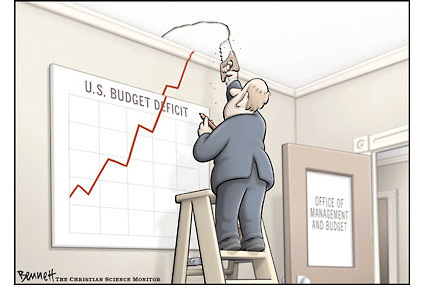
The January deficit fell short of analysts' consensus forecast in a Reuters poll for a $47 billion budget gap and compares with a $91.41 billion deficit posted in December and a $63.46 billion gap for the same period a year ago.
In January, outlays fell to $247.88 billion from $310.33 billion in December and compared with $289.55 billion in January 2009, the department said.
Receipts totaled $205.24 billion from $218.92 billion in December and were the lowest for a January since 2005, the department said. Receipts in January 2009 stood at $226.09 billion.
The department said that because the January 1 holiday fell on a Friday this year, some spending had been shifted from January into December 2009.
The deficit over the four months of the fiscal year to date now stands at a record $430.69 billion compared with a deficit of $395.94 billion for the same four-month period a year ago.
Earlier this month, the White House forecast a $1.56 trillion budget deficit in 2010, or 10.6 percent of gross domestic product. This compares with a budget shortfall of $1.41 trillion in fiscal 2009.
But for 2011 the White House expects the budget deficit to shrink to $1.27 trillion, or 8.3 percent of GDP.
To combat the ballooning deficit, President Barack Obama will sign an executive order on Thursday to establish a bipartisan commission to propose ways to tackle it.
Obama will name Erskine Bowles, former chief of staff to President Bill Clinton, and former Republican Senator Alan Simpson to serve as co-chairs of the body.
[Reuters]
New York recession fell harder on Wall Street, males
17. February. 2010
 NEW YORK - A number of industries in New York state, including financial services, terminated at least 5 percent of their workers in the current recession, which has fallen harder on men, minorities and those without college degrees, a report said on Tuesday.
The financial services sector, which powers New York's economy, shed 44,200 jobs, a 6.1 percent decline in the work force, according to the report by State Comptroller Thomas DiNapoli.
Almost 60 percent of the losses were at securities companies, which sent out 26,000 pink slips, decreasing the work force by 12.5 percent. On a percentage basis, Wall Street's decline was the biggest.
Over 75 percent of those who were laid off had at least a bachelor's degree and about 14 percent of them were Asian -- about twice the statewide average, the report said.
Fewer bankers were laid off: the credit intermediation industry, which includes credit unions, cut 8,300 workers, a 4.9 percent decline.
Though much of New York's upstate region has been declining for years as manufacturers closed or left, the Democratic comptroller's report underscored New York City's pain in the latest recession:
* About 70 percent of the total of 291,900 of jobs cut from July 2008, when employment peaked, through December 2009, were axed by employers located in the city and nearby suburbs.
* A few industries that men dominate, including construction and manufacturing, had some of the heaviest losses -- the former lost 42,300 positions and the latter lost 54,000 workers.
This is one reason the recession has fallen harder on men, whose jobless rate rose to 9.8 percent through December 2009, from 4.9 percent in December 2007, when the recession began.
For women, the unemployment rate rose to 7.7 percent from 4.4 percent, partly because they tend to dominate two of the few growing fields: education and health services. If those two sectors are excluded, the total of lost jobs rises to 347,000.
Among minorities, the unemployment rate for Black or African American workers has remained at around the 14.8 percent level it hit in December 2008, up from 8.8 percent in December 2007, the report said. For Hispanics, the rate almost doubled to 13 percent from 6.6 percent in the two-year period.
The unemployment rate for workers who did not finish high school soared to 15.5 percent from 10.5 percent.
Other industries with deep job losses included professional and business services, which sliced 68,300 positions. This worked out to a 5.9 percent decline in the work force, which includes legal, accounting and employment services.
The wholesale trade sector shed 24,900 workers, a 7.1 percent decline.
In the information sector, which includes publishing, 16,200 workers lost their jobs, cutting the work force by 6.2 percent.
Transportation, warehousing and utilities companies axed 14,200 of their workers, a 5.1 percent decline. Minority workers are half of this work force, and more than one out of every six jobs lost was at courier and messenger services.
Women represent more than half of the workers in retail trade, which shed 30,600 positions, a 3.4 percent decline. The leisure and hospitality industry laid off 16,400 workers, a 2.3 percent decline.
[Reuters]
The financial services sector, which powers New York's economy, shed 44,200 jobs, a 6.1 percent decline in the work force, according to the report by State Comptroller Thomas DiNapoli.
Almost 60 percent of the losses were at securities companies, which sent out 26,000 pink slips, decreasing the work force by 12.5 percent. On a percentage basis, Wall Street's decline was the biggest.
Over 75 percent of those who were laid off had at least a bachelor's degree and about 14 percent of them were Asian -- about twice the statewide average, the report said.
Fewer bankers were laid off: the credit intermediation industry, which includes credit unions, cut 8,300 workers, a 4.9 percent decline.
Though much of New York's upstate region has been declining for years as manufacturers closed or left, the Democratic comptroller's report underscored New York City's pain in the latest recession:
* About 70 percent of the total of 291,900 of jobs cut from July 2008, when employment peaked, through December 2009, were axed by employers located in the city and nearby suburbs.
* A few industries that men dominate, including construction and manufacturing, had some of the heaviest losses -- the former lost 42,300 positions and the latter lost 54,000 workers.
This is one reason the recession has fallen harder on men, whose jobless rate rose to 9.8 percent through December 2009, from 4.9 percent in December 2007, when the recession began.
For women, the unemployment rate rose to 7.7 percent from 4.4 percent, partly because they tend to dominate two of the few growing fields: education and health services. If those two sectors are excluded, the total of lost jobs rises to 347,000.
Among minorities, the unemployment rate for Black or African American workers has remained at around the 14.8 percent level it hit in December 2008, up from 8.8 percent in December 2007, the report said. For Hispanics, the rate almost doubled to 13 percent from 6.6 percent in the two-year period.
The unemployment rate for workers who did not finish high school soared to 15.5 percent from 10.5 percent.
Other industries with deep job losses included professional and business services, which sliced 68,300 positions. This worked out to a 5.9 percent decline in the work force, which includes legal, accounting and employment services.
The wholesale trade sector shed 24,900 workers, a 7.1 percent decline.
In the information sector, which includes publishing, 16,200 workers lost their jobs, cutting the work force by 6.2 percent.
Transportation, warehousing and utilities companies axed 14,200 of their workers, a 5.1 percent decline. Minority workers are half of this work force, and more than one out of every six jobs lost was at courier and messenger services.
Women represent more than half of the workers in retail trade, which shed 30,600 positions, a 3.4 percent decline. The leisure and hospitality industry laid off 16,400 workers, a 2.3 percent decline.
[Reuters]
Fed's Kocherlakota sees slow U.S. recovery
16. February. 2010
 ST. PAUL, Minnesota - The U.S. economy will likely grow at a pace of close to 3 percent over the next two years, slower than many private-sector economists forecast, Federal Reserve Bank of Minneapolis President Narayana Kocherlakota said on Tuesday.
While a recovery from the worst downturn since the 1930s is underway, the outlook is clouded by regulatory uncertainty and a still-weak banking sector, Kocherlakota said in the prepared text of his first public speech since his appointment to the top job at the regional Fed bank last September.
"I do think that the economy is on the mend and should continue to recover over the next two years -- in terms of both GDP and unemployment -- but at slower rates than we would like," Kocherlakota told a group of bankers in St. Paul, Minnesota.
Unemployment is unlikely to fall below 9 percent this year or 8 percent next year, he said.
"To get a true expansion in employment and in the economy, the hiring rate has to pick up -- and we have yet to see evidence that it will do so in the immediate future," he said.
On a more positive note, he said, the Fed has kept inflation "at levels consistent with good long-run economic performance," he said.
"The news is mostly good on the inflation front, although the need for careful policy choices is even more critical than usual," Kocherlakota said.
The Fed lowered its target for overnight lending between banks to near zero in December 2008 to help stave off the worst U.S. economic downturn since the 1930s, and it has vowed to keep rates at rock bottom for an "extended period" to nurture a nascent recovery.
But at the last policy-setting meeting Kansas City Fed President Thomas Hoenig's dissented against the phrase "extended period", which has investors watching closely for any signs that the committee is inching closer to removing the phrase. The removal of that phrase would be a step toward tighter monetary policy.
Kocherlakota will rotate into a voting spot on the Fed's monetary policy-setting Federal Open Market Committee next year.
Despite relatively tame inflation, the Fed must be watchful, Kocherlakota said.
Excess reserves at deposit institutions mean there is the potential for inflation should inflationary expectations increase, he said.
But, he added, for that to happen, "we would need a combination of bad monetary policy and poor fiscal management." That combination, he said, is not likely.
"Nonetheless, good policy requires good choices, and policymakers at the Federal Reserve and in Congress need to keep this scenario in mind when making their decisions," he said.
[Reuters]
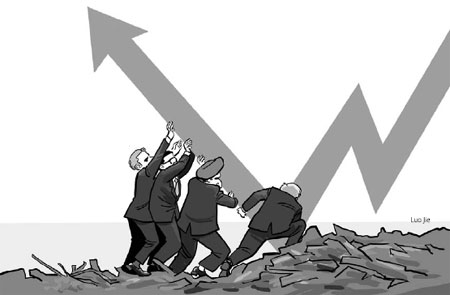
While a recovery from the worst downturn since the 1930s is underway, the outlook is clouded by regulatory uncertainty and a still-weak banking sector, Kocherlakota said in the prepared text of his first public speech since his appointment to the top job at the regional Fed bank last September.
"I do think that the economy is on the mend and should continue to recover over the next two years -- in terms of both GDP and unemployment -- but at slower rates than we would like," Kocherlakota told a group of bankers in St. Paul, Minnesota.
Unemployment is unlikely to fall below 9 percent this year or 8 percent next year, he said.
"To get a true expansion in employment and in the economy, the hiring rate has to pick up -- and we have yet to see evidence that it will do so in the immediate future," he said.
On a more positive note, he said, the Fed has kept inflation "at levels consistent with good long-run economic performance," he said.
"The news is mostly good on the inflation front, although the need for careful policy choices is even more critical than usual," Kocherlakota said.
The Fed lowered its target for overnight lending between banks to near zero in December 2008 to help stave off the worst U.S. economic downturn since the 1930s, and it has vowed to keep rates at rock bottom for an "extended period" to nurture a nascent recovery.
But at the last policy-setting meeting Kansas City Fed President Thomas Hoenig's dissented against the phrase "extended period", which has investors watching closely for any signs that the committee is inching closer to removing the phrase. The removal of that phrase would be a step toward tighter monetary policy.
Kocherlakota will rotate into a voting spot on the Fed's monetary policy-setting Federal Open Market Committee next year.
Despite relatively tame inflation, the Fed must be watchful, Kocherlakota said.
Excess reserves at deposit institutions mean there is the potential for inflation should inflationary expectations increase, he said.
But, he added, for that to happen, "we would need a combination of bad monetary policy and poor fiscal management." That combination, he said, is not likely.
"Nonetheless, good policy requires good choices, and policymakers at the Federal Reserve and in Congress need to keep this scenario in mind when making their decisions," he said.
[Reuters]
New York factories gain but China sells U.S. debt
16. February. 2010
 NEW YORK - A New York state manufacturing gauge published on Tuesday hit its highest level since October this month, while sentiment among home builders rose more than expected, signaling continued improvement in the U.S. economy.
But analysts said the data also showed a factory rebound might run out of momentum.
At the same time, a U.S. capital flows report showing China paring its Treasuries holdings underscored analysts' worry that the recovery could be stymied by a steep rise in bond yields, making borrowing more expensive for homeowners and companies.
However, the generally stronger-than-expected economic data helped boost risk appetite and drove Wall Street stocks up more than 1 percent in afternoon trading.
The New York Federal Reserve said in a barometer of manufacturing in New York state rose in February as inventories jumped. Its "Empire State" general business conditions index rose to 24.91 in February, the highest level since October and up from 15.92 in January.
"The U.S. manufacturing sector shows no signs of slowing down in February," said Kathy Lien, director of currency research at GFT in New York. "The strong number will lead the markets to expect a similar improvement in the Philadelphia Fed index, which will be released on Thursday."
On the surface, the index appeared to reinforce the impression that industrial companies are continuing to bounce back after the long recession. Economists polled by Reuters had expected a February figure of 18.
Despite a stronger-than-expected headline reading, however, some analysts said the details of the report were somewhat more bearish.
"A lot of the improvement was driven by a correction of inventories," said Anna Piretti, senior U.S. economist at BNP Paribas in New York. "It's a temporary factor. What worried me more was a sharp decline in new orders."
The inventories index rose sharply, to zero from negative 17.33, its highest reading in more than a year.
But the new orders index tumbled to 8.78 in February from 20.48 in January -- a warning sign that activity could decelerate in the future.
However, the report offered some signs of improvement in the job market at factories. Employment indexes were positive for a second consecutive month, although at relatively low levels, the Fed said.
Separately, the National Association of Home Builders said U.S. home-builder sentiment rose more than expected in February as low interest rates and a sharper-than-expected drop in unemployment boosted confidence for the first time since September.
The percentage of Americans falling behind on credit card bills stabilized in January, according to data from five lenders released on Tuesday, signaling that U.S. consumer credit woes may be leveling off.
CHINA CUTS TREASURIES
But continued improvement in U.S. mortgage and other lending markets still depends on borrowing rates staying low, a factor influenced by foreign purchases of U.S. debt.
Overall, net capital inflows into the United States rose to $60.9 billion in December from an inflow of $30.9 billion the prior month. But foreigners cut purchases of long-term securities, the Treasury said on Tuesday.
China has been a net seller of some $45 billion of U.S. Treasuries over the last five months, wrote Alan Ruskin, chief international strategist with RBS Securities Inc. He added that it was "a long enough period to hint strongly at a trend."
Japan overtook China as the biggest foreign holder of U.S. Treasury debt in December for the first time in more than a year.
Much of China's selling has been in short-dated Treasury bills, but China has not indicated that it will buy longer maturity U.S. government notes and bonds instead. "That is the bad news for the U.S. dollar and the Treasury market," Ruskin wrote.
Analysts said this underscored the risk that waning appetite for U.S. debt among major foreign holders could spark a sell-off and send yields rising.
Over the longer term, borrowing costs may determine how anemic the U.S. economic recovery will prove.
The U.S. economy will likely grow at a pace of close to 3 percent over the next two years, slower than many private-sector economists forecast, Federal Reserve Bank of Minneapolis President Narayana Kocherlakota said on Tuesday.
Also on Tuesday, Kansas City Fed President Thomas Hoenig said the ballooning U.S. budget deficit will increase pressures on the Fed to hold interest rates low and make it harder to avoid inflation.
[Reuters]

But analysts said the data also showed a factory rebound might run out of momentum.
At the same time, a U.S. capital flows report showing China paring its Treasuries holdings underscored analysts' worry that the recovery could be stymied by a steep rise in bond yields, making borrowing more expensive for homeowners and companies.
However, the generally stronger-than-expected economic data helped boost risk appetite and drove Wall Street stocks up more than 1 percent in afternoon trading.
The New York Federal Reserve said in a barometer of manufacturing in New York state rose in February as inventories jumped. Its "Empire State" general business conditions index rose to 24.91 in February, the highest level since October and up from 15.92 in January.
"The U.S. manufacturing sector shows no signs of slowing down in February," said Kathy Lien, director of currency research at GFT in New York. "The strong number will lead the markets to expect a similar improvement in the Philadelphia Fed index, which will be released on Thursday."
On the surface, the index appeared to reinforce the impression that industrial companies are continuing to bounce back after the long recession. Economists polled by Reuters had expected a February figure of 18.
Despite a stronger-than-expected headline reading, however, some analysts said the details of the report were somewhat more bearish.
"A lot of the improvement was driven by a correction of inventories," said Anna Piretti, senior U.S. economist at BNP Paribas in New York. "It's a temporary factor. What worried me more was a sharp decline in new orders."
The inventories index rose sharply, to zero from negative 17.33, its highest reading in more than a year.
But the new orders index tumbled to 8.78 in February from 20.48 in January -- a warning sign that activity could decelerate in the future.
However, the report offered some signs of improvement in the job market at factories. Employment indexes were positive for a second consecutive month, although at relatively low levels, the Fed said.
Separately, the National Association of Home Builders said U.S. home-builder sentiment rose more than expected in February as low interest rates and a sharper-than-expected drop in unemployment boosted confidence for the first time since September.
The percentage of Americans falling behind on credit card bills stabilized in January, according to data from five lenders released on Tuesday, signaling that U.S. consumer credit woes may be leveling off.
CHINA CUTS TREASURIES
But continued improvement in U.S. mortgage and other lending markets still depends on borrowing rates staying low, a factor influenced by foreign purchases of U.S. debt.
Overall, net capital inflows into the United States rose to $60.9 billion in December from an inflow of $30.9 billion the prior month. But foreigners cut purchases of long-term securities, the Treasury said on Tuesday.
China has been a net seller of some $45 billion of U.S. Treasuries over the last five months, wrote Alan Ruskin, chief international strategist with RBS Securities Inc. He added that it was "a long enough period to hint strongly at a trend."
Japan overtook China as the biggest foreign holder of U.S. Treasury debt in December for the first time in more than a year.
Much of China's selling has been in short-dated Treasury bills, but China has not indicated that it will buy longer maturity U.S. government notes and bonds instead. "That is the bad news for the U.S. dollar and the Treasury market," Ruskin wrote.
Analysts said this underscored the risk that waning appetite for U.S. debt among major foreign holders could spark a sell-off and send yields rising.
Over the longer term, borrowing costs may determine how anemic the U.S. economic recovery will prove.
The U.S. economy will likely grow at a pace of close to 3 percent over the next two years, slower than many private-sector economists forecast, Federal Reserve Bank of Minneapolis President Narayana Kocherlakota said on Tuesday.
Also on Tuesday, Kansas City Fed President Thomas Hoenig said the ballooning U.S. budget deficit will increase pressures on the Fed to hold interest rates low and make it harder to avoid inflation.
[Reuters]
L.A. budget crisis threatens jobs, credit rating
15. February. 2010
 LOS ANGELES - Los Angeles, the second-largest city in the United States, is confronting a mounting budget deficit that threatens to force thousands of job cuts, deplete its fiscal reserve and further damage its credit rating.
The $212 million budget shortfall, projected to more than double next year, is attributed mainly to plunging tax revenue blamed on the region's sagging economy, falling property values and a 15 percent jobless rate -- one of the highest of any major U.S. city.
"The last time we saw this kind of drop in revenue was the Great Depression," Miguel Santana, the city's chief financial officer, told Reuters. "It speaks to how severe this budget crisis is."
Mayor Antonio Villaraigosa and other senior city officials spoke on Friday with executives at Fitch Ratings, seeking to forestall a further diminution of Los Angeles' credit-worthiness.
The city was downgraded late last year from a top rating of "AAA" to "AA-" as serious budget problems loomed.
One major concern for holders of municipal debt is a plan by the city to use most of its $230 million reserve to close its current budget shortfall, Santana said.
He added the city plans to replenish its reserve in part by leasing out its parking garages to private operators. But analysts said sharp revenue declines leave Los Angeles with relatively few options.
"It's pretty simple. They are going to need to make some serious spending cuts," said Ian Carroll of Standard & Poor's.
LAYOFFS OR PAY CUTS?
The crisis has put Villaraigosa, a former labor activist, squarely at odds with unions that represent 98 percent of L.A.'s municipal work force, which in turn accounts for 80 percent of the city budget.
Villaraigosa said last week he will propose the elimination of 1,200 to 2,000 city government jobs in next year's budget, on top of 1,000 positions the mayor last week ordered to be cut over the next few months.
He hopes to achieve some cuts through attrition and by moving some workers into vacant positions in self-supporting agencies, such as the Department of Water and Power. But Villaraigosa has acknowledged that as many as 350 employees will likely be terminated in the initial round of cuts.
He also has suggested that large layoffs could be avoided if the unions were willing to accept pay cuts.
"If everybody took a 5 percent cut, it would add $150 million to the general fund," the mayor said on Thursday at an event sponsored by the local business leaders.
Union officials have bristled at those proposals.
"We find it ironic that at the same time Congress is debating a jobs bill, the mayor of one of the largest cities in the country is talking about laying off 3,000 people," said Barbara Maynard, spokeswoman for the Coalition of L.A. City Unions. "The last thing Los Angeles or any city needs is to have more people on the unemployment line."
She said before considering layoffs and pay cuts, the city should seek reductions from some of the $2.5 billion it pays for work performed by private contractors.
Private law firms that bill the city for hundreds of dollars an hour, for example, "can certainly afford a pay cut more than a worker who is making $15 an hour," she said.
Unions are still smarting from concessions recently negotiated with the city to pare back most of a $400 million shortfall in the municipal pension system caused by losses on Wall Street. A key part of that deal was an early retirement package that moved 2,400 employees off the city payroll.
For now, Villaraigosa has said he intends to keep police officers and firefighters exempt from the job cuts he is seeking, even though police and fire protection accounts for 75 percent of the city's general fund.
In the end he vowed to do what was necessary to get the city's financial house in order.
"There is no scenario, none, while I am mayor of Los Angeles where this city will ever be bankrupt," he said. "I can guarantee that."
[Reuters]

The $212 million budget shortfall, projected to more than double next year, is attributed mainly to plunging tax revenue blamed on the region's sagging economy, falling property values and a 15 percent jobless rate -- one of the highest of any major U.S. city.
"The last time we saw this kind of drop in revenue was the Great Depression," Miguel Santana, the city's chief financial officer, told Reuters. "It speaks to how severe this budget crisis is."
Mayor Antonio Villaraigosa and other senior city officials spoke on Friday with executives at Fitch Ratings, seeking to forestall a further diminution of Los Angeles' credit-worthiness.
The city was downgraded late last year from a top rating of "AAA" to "AA-" as serious budget problems loomed.
One major concern for holders of municipal debt is a plan by the city to use most of its $230 million reserve to close its current budget shortfall, Santana said.
He added the city plans to replenish its reserve in part by leasing out its parking garages to private operators. But analysts said sharp revenue declines leave Los Angeles with relatively few options.
"It's pretty simple. They are going to need to make some serious spending cuts," said Ian Carroll of Standard & Poor's.
LAYOFFS OR PAY CUTS?
The crisis has put Villaraigosa, a former labor activist, squarely at odds with unions that represent 98 percent of L.A.'s municipal work force, which in turn accounts for 80 percent of the city budget.
Villaraigosa said last week he will propose the elimination of 1,200 to 2,000 city government jobs in next year's budget, on top of 1,000 positions the mayor last week ordered to be cut over the next few months.
He hopes to achieve some cuts through attrition and by moving some workers into vacant positions in self-supporting agencies, such as the Department of Water and Power. But Villaraigosa has acknowledged that as many as 350 employees will likely be terminated in the initial round of cuts.
He also has suggested that large layoffs could be avoided if the unions were willing to accept pay cuts.
"If everybody took a 5 percent cut, it would add $150 million to the general fund," the mayor said on Thursday at an event sponsored by the local business leaders.
Union officials have bristled at those proposals.
"We find it ironic that at the same time Congress is debating a jobs bill, the mayor of one of the largest cities in the country is talking about laying off 3,000 people," said Barbara Maynard, spokeswoman for the Coalition of L.A. City Unions. "The last thing Los Angeles or any city needs is to have more people on the unemployment line."
She said before considering layoffs and pay cuts, the city should seek reductions from some of the $2.5 billion it pays for work performed by private contractors.
Private law firms that bill the city for hundreds of dollars an hour, for example, "can certainly afford a pay cut more than a worker who is making $15 an hour," she said.
Unions are still smarting from concessions recently negotiated with the city to pare back most of a $400 million shortfall in the municipal pension system caused by losses on Wall Street. A key part of that deal was an early retirement package that moved 2,400 employees off the city payroll.
For now, Villaraigosa has said he intends to keep police officers and firefighters exempt from the job cuts he is seeking, even though police and fire protection accounts for 75 percent of the city's general fund.
In the end he vowed to do what was necessary to get the city's financial house in order.
"There is no scenario, none, while I am mayor of Los Angeles where this city will ever be bankrupt," he said. "I can guarantee that."
[Reuters]
Subscribe to:
Posts (Atom)


+of+Copy+of+Scan+Head+Letter3.JPG)
