

27. Feb. 2010
Amir Al Aidarous, The Yemeni Minister of Petroleum and Mining, has held a meeting with a delegation from Russian Gazprom to discuss room for potential cooperation in the field of exploration in Yemen's petroleum sector.
The minister expressed his optimism in future cooperation with the Russian company saying that its vast experience will prove beneficial in developing the country's reserves and production rates as well as paving the grounds for other Russian investors to flock to Yemen.
[BEDigest]
Showing posts with label Middle east. Show all posts
Showing posts with label Middle east. Show all posts
Iranian Bank Wins Ruling over British Treasury
27. Feb. 2010
 The High Court in the UK passed a verdict in favor of Iran's Bank Mellat against the British Treasury. The privately owned Iranian bank accused of providing financial services to companies engaged in the country's nuclear program, has won a "human rights" legal victory in the High Court. Bank Mellat is fighting to overturn a Treasury ruling preventing all persons operating in the financial sector from taking part in any transaction with the bank. Justice John Mitting, sitting in London, declared on 24 February 2010 that, in its legal battle with the Treasury, the bank was entitled under the European Convention on Human Rights to be treated in the same way as an individual challenging a control order.
The High Court condemned the Treasury and ruled that Bank Mellat was entitled to sufficient information about the allegations being made against it to ensure a fair hearing. The judge said the difficulty for the Treasury was in the evidence supporting the order. He ruled that any restriction on the bank’s activity resulting in the loss of shareholders’ capital, is illegal and in breach of human rights. He said the order directly impinged “on the bank’s civil rights and obligations.” The judge said an order he had made for disclosure “was intended only to ensure that the bank had the opportunity of giving effective instructions about the essential allegations against it.
” Nevertheless, the judge said he was giving government lawyers permission to appeal because of the importance of his decision. Bank Mellat has branches throughout Iran and in Turkey and South Korea, as well as subsidiaries in Malaysia, Armenia, and the UK.
[Tehran Times]

The High Court condemned the Treasury and ruled that Bank Mellat was entitled to sufficient information about the allegations being made against it to ensure a fair hearing. The judge said the difficulty for the Treasury was in the evidence supporting the order. He ruled that any restriction on the bank’s activity resulting in the loss of shareholders’ capital, is illegal and in breach of human rights. He said the order directly impinged “on the bank’s civil rights and obligations.” The judge said an order he had made for disclosure “was intended only to ensure that the bank had the opportunity of giving effective instructions about the essential allegations against it.
” Nevertheless, the judge said he was giving government lawyers permission to appeal because of the importance of his decision. Bank Mellat has branches throughout Iran and in Turkey and South Korea, as well as subsidiaries in Malaysia, Armenia, and the UK.
[Tehran Times]


"Iran's Economy Slightly Affected by Financial Crisis "
26. Feb. 2010
 Iranian Minister of Economic Affairs and Finance Shamseddin Hosseini reiterated that the world economic meltdown had modest effects on Iran's economy due to the country's separation and distance from global financial markets. "Iran's economy was not affected by the financial crisis because it was not integrated with the world financial markets," Hosseini said. Meantime, he said that the meltdown has left some impacts on Iranian economy.
"But, the volume of Iran's foreign trade resulting from oil and non-oil exports as well as imports were affected by the crisis," Hosseini said. He further reminded that Iran has registered a positive economic growth and experienced an improvement in the balance of non-oil exports and imports during the period of economic crisis in the world.
Hosseini also pointed out that most oil-exporting countries could bear the economic crisis and experience higher economic growth in comparison with the other countries. He said the success and positive economic growth of such countries resulted from their high oil revenues which had stuffed their foreign exchange reserves prior to the crisis.
[Fars]

"But, the volume of Iran's foreign trade resulting from oil and non-oil exports as well as imports were affected by the crisis," Hosseini said. He further reminded that Iran has registered a positive economic growth and experienced an improvement in the balance of non-oil exports and imports during the period of economic crisis in the world.
Hosseini also pointed out that most oil-exporting countries could bear the economic crisis and experience higher economic growth in comparison with the other countries. He said the success and positive economic growth of such countries resulted from their high oil revenues which had stuffed their foreign exchange reserves prior to the crisis.
[Fars]
Prospects for Egyptian economy in 2010
26. Feb. 2010
 With so little public enthusiasm for official politics, average Egyptians will care more about the country's ability to face the global economic crisis. The last few years have witnessed a labor movement that has mobilized more people in protests than any Kifaya demonstration, as well as a collective concern over rapid cost-of-living increases.
While economic growth has slowed, it is still projected to reach at least 5% in 2010. However, official unemployment figures are rising as is inflation. In late 2008, when year-on-year inflation reached 23%, major government investment in subsidies was necessary. Inflation fell to just above 10% by summer 2009, but reached 13% in October 2010. Although US$1.8 billion in emergency social funding was approved this month, it has been kept off-budget, with the government attempting to stick to IMF-backed efforts to control its public debt.
In this context, although 150 state-owned companies are potentially available for privatization, the government is not in a hurry to find buyers, and may want avoid the anticipated strikes that will surround privatization sales. Instead, partial privatization - with the government retaining a 51% majority - appears the preferred option, offering income for the privatization program, but delaying the full sale of these companies.
[Zawya]

While economic growth has slowed, it is still projected to reach at least 5% in 2010. However, official unemployment figures are rising as is inflation. In late 2008, when year-on-year inflation reached 23%, major government investment in subsidies was necessary. Inflation fell to just above 10% by summer 2009, but reached 13% in October 2010. Although US$1.8 billion in emergency social funding was approved this month, it has been kept off-budget, with the government attempting to stick to IMF-backed efforts to control its public debt.
In this context, although 150 state-owned companies are potentially available for privatization, the government is not in a hurry to find buyers, and may want avoid the anticipated strikes that will surround privatization sales. Instead, partial privatization - with the government retaining a 51% majority - appears the preferred option, offering income for the privatization program, but delaying the full sale of these companies.
[Zawya]
Iran, Qatar to Develop Oil, Gas Cooperation
26. Feb. 2010
 Iranian and Qatari officials in a meeting in Tehran underlined the necessity for the expansion of mutual cooperation in the oil and gas sectors. "The meeting was aimed at developing oil and gas cooperation in region and defining infrastructures for increasing trade exchanges at the international levels," Qatari Minister of State in Energy and Industries, Mohammad ibn Saleh Al Sadah, said on the sidelines of a meeting with Iranian oil Minister Masoud Mir-Kazzemi here in Tehran.
"In the meeting with Iranian oil minister, the ground was paved for us to be more hopeful than the past about the future of cooperation with Iran in the energy sector," Al Sadeh added. He also reiterated that Iran and Qatar have had good and long-term cooperation with each other in the oil sector and that the two sides have planned and implemented very desirable measures in this regard. Al Sadeh also underlined that a gas conference underway in Qatar, of which Iran is one of the organizers, is an instance of such cooperation between Tehran and Doha. Iran and Qatar have expanded their economic ties and cooperation in recent years, with Qatar's National Bank (QNB) planning to invest €400 million in Iran's Esfandiar oilfield in the Persian Gulf. The South Pars/North Dome field is a natural gas condensate field located on the Persian Gulf. It is the world''s largest gas field, shared between Iran and Qatar. This gas field covers an area of 9700 square kilometers, of which 3700 square kilometers (South Pars) is in Iranian territorial waters and 6000 square kilometers (North Dome) is in Qatari territorial waters.
It is estimated to hold around 1800 Tscf of gas in place and some 50 billion barrels of condensate. The field's recoverable gas reserve is equivalent to some 215 billion barrel of oil and it also holds about 16 billion barrels of recoverable condensate corresponding of about 230 billion barrel of oil equivalent recoverable hydrocarbons. Head of the Financial Office of Iranian Offshore Oil Company (IOOC) Hossein Jafari in January reiterated that according to Iran's regulations on financing contracts in the oil industry, 85% of primary investments in financing projects should be provided by the investors, but Qatar's National Bank is to provide 100% of the funding.
[Fars]

"In the meeting with Iranian oil minister, the ground was paved for us to be more hopeful than the past about the future of cooperation with Iran in the energy sector," Al Sadeh added. He also reiterated that Iran and Qatar have had good and long-term cooperation with each other in the oil sector and that the two sides have planned and implemented very desirable measures in this regard. Al Sadeh also underlined that a gas conference underway in Qatar, of which Iran is one of the organizers, is an instance of such cooperation between Tehran and Doha. Iran and Qatar have expanded their economic ties and cooperation in recent years, with Qatar's National Bank (QNB) planning to invest €400 million in Iran's Esfandiar oilfield in the Persian Gulf. The South Pars/North Dome field is a natural gas condensate field located on the Persian Gulf. It is the world''s largest gas field, shared between Iran and Qatar. This gas field covers an area of 9700 square kilometers, of which 3700 square kilometers (South Pars) is in Iranian territorial waters and 6000 square kilometers (North Dome) is in Qatari territorial waters.
It is estimated to hold around 1800 Tscf of gas in place and some 50 billion barrels of condensate. The field's recoverable gas reserve is equivalent to some 215 billion barrel of oil and it also holds about 16 billion barrels of recoverable condensate corresponding of about 230 billion barrel of oil equivalent recoverable hydrocarbons. Head of the Financial Office of Iranian Offshore Oil Company (IOOC) Hossein Jafari in January reiterated that according to Iran's regulations on financing contracts in the oil industry, 85% of primary investments in financing projects should be provided by the investors, but Qatar's National Bank is to provide 100% of the funding.
[Fars]
GCC banks facing another tough year
23. Feb. 2010
 Ratings agency Standard & Poor has said it believes that 2010 will be another difficult year for Gulf-based banks as they continue to clean up their loan books.
In a new report, the agency said the global economic slowdown and financial crisis had put the banking sector in the region to the test over the past 18 months, during which it had taken dozens of negative rating actions in the sector.
To date, about one-third of its 30 ratings on banks in the GCC have a negative outlook. However, the outlooks on most Saudi banks and on all Qatari banks remain stable.
"We see a growing disparity in credit quality among banks in the Gulf, between the stronger Saudi and Qatari banks on the one hand and the relatively weaker Dubai, Kuwaiti, and Bahraini investment banks on the other," said S&P credit analyst Mohamed Damak.
"Despite the fact that we remain cautiously optimistic that economic conditions will improve, we do not exclude further negative rating actions in the short term."
It said the financial standing of Gulf banks as a group remained "under pressure" despite recent signs of recovery in their respective national economies.
"Overall, we have noticed a marked increase in nonperforming loans (NPLs), with the NPLs to total loans ratio reaching 5.4 percent on average on September 30, 2009, compared with 2.7 percent at year-end 2008," the report added.
Accounting for most of the increase were Kuwait and Dubai-based banks, it said.
"We expect asset quality indicators to further deteriorate in the next few quarters as the economic slowdown continues to take its toll on the corporate and retail sectors," said Damak.
The announcement regarding the restructuring of Dubai World, including a requested standstill on all loans to it and its its real estate subsidiary Nakheel "exacerbated the problems of Dubai-based banks", S&P added.
[Arabian Business, by: Andy Sambidge]

In a new report, the agency said the global economic slowdown and financial crisis had put the banking sector in the region to the test over the past 18 months, during which it had taken dozens of negative rating actions in the sector.
To date, about one-third of its 30 ratings on banks in the GCC have a negative outlook. However, the outlooks on most Saudi banks and on all Qatari banks remain stable.
"We see a growing disparity in credit quality among banks in the Gulf, between the stronger Saudi and Qatari banks on the one hand and the relatively weaker Dubai, Kuwaiti, and Bahraini investment banks on the other," said S&P credit analyst Mohamed Damak.
"Despite the fact that we remain cautiously optimistic that economic conditions will improve, we do not exclude further negative rating actions in the short term."
It said the financial standing of Gulf banks as a group remained "under pressure" despite recent signs of recovery in their respective national economies.
"Overall, we have noticed a marked increase in nonperforming loans (NPLs), with the NPLs to total loans ratio reaching 5.4 percent on average on September 30, 2009, compared with 2.7 percent at year-end 2008," the report added.
Accounting for most of the increase were Kuwait and Dubai-based banks, it said.
"We expect asset quality indicators to further deteriorate in the next few quarters as the economic slowdown continues to take its toll on the corporate and retail sectors," said Damak.
The announcement regarding the restructuring of Dubai World, including a requested standstill on all loans to it and its its real estate subsidiary Nakheel "exacerbated the problems of Dubai-based banks", S&P added.
[Arabian Business, by: Andy Sambidge]
Economy briefs: DIB announces AED1.2bn profit & others..
12. February. 2010
 DUBAI: Dubai Islamic Bank (DIB) announced on Thursday its financial results for the 12 months ending Dec. 31, 2009, demonstrating the bank’s resilience in the face of challenging global conditions, which continue to impact the performance of financial services firms worldwide. For the full year 2009, DIB reported a net profit of AED1.2 billion.
Emaar swings to Q4 profit
DUBAI: Dubai’s Emaar Properties said on Thursday it would focus on developing middle income housing in emerging markets in 2010 after returning to profit in the fourth quarter, but missing most analysts’ forecasts. Net profit in the three months to Dec. 31 was 720 million dirhams ($196.1 million) compared to a loss of 2.4 billion dirhams in the fourth quarter of 2008, it said in a statement.
S&P puts GFH on ‘selective default’
MANAMA: Standard & Poor’s has lowered Bahrain-based Gulf Finance House (GFH) to a selective default (SD/SD) on partial debt extension. GFH announced on Wednesday that it had got extension in its debt upon the maturity of $100 million of its $300 million syndicated loan for six months. “Because we consider the partial debt maturity extension a ‘distressed exchange’, we are downgrading GFH to selective default from CC/C,” Standard & Poor’s Ratings Services said in a statement.
Oman sees no bonds in 2010
MUSCAT: Oman has no plans to issue government bonds this year and banks remain liquid despite the impact of the global financial crisis, the Gulf country’s central bank head said on Thursday. The global economic downturn slashed growth rates and froze credit in the world’s top oil exporting region last year, forcing governments to embark on massive fiscal spending. “There is no plan to issue government bonds in 2010,” Central Bank of Oman Executive President Hamood Sangour Al-Zadjali told Reuters in a brief telephone interview.
Volkswagen recalls 193,000 vehicles
WASHINGTON: German carmaker Volkswagen announced Thursday a recall of more than 193,000 vehicles in Brazil for malfunctions in the rear wheels of its Novo Gol and Voyage models. The company said it had determined the component had not been sufficiently lubricated, which could cause the rear wheels to seize up or even fall off.
Credit Suisse posts $6.3bn profit
GENEVA: Switzerland’s banking giant Credit Suisse reported Thursday 2009 net profits of 6.7 billion francs ($6.3 billion) — but also unveiled lower-than-expected fourth quarter results. Profit for the final quarter of last year stood at 800 million francs.
[arab news]

Emaar swings to Q4 profit
DUBAI: Dubai’s Emaar Properties said on Thursday it would focus on developing middle income housing in emerging markets in 2010 after returning to profit in the fourth quarter, but missing most analysts’ forecasts. Net profit in the three months to Dec. 31 was 720 million dirhams ($196.1 million) compared to a loss of 2.4 billion dirhams in the fourth quarter of 2008, it said in a statement.
S&P puts GFH on ‘selective default’
MANAMA: Standard & Poor’s has lowered Bahrain-based Gulf Finance House (GFH) to a selective default (SD/SD) on partial debt extension. GFH announced on Wednesday that it had got extension in its debt upon the maturity of $100 million of its $300 million syndicated loan for six months. “Because we consider the partial debt maturity extension a ‘distressed exchange’, we are downgrading GFH to selective default from CC/C,” Standard & Poor’s Ratings Services said in a statement.
Oman sees no bonds in 2010
MUSCAT: Oman has no plans to issue government bonds this year and banks remain liquid despite the impact of the global financial crisis, the Gulf country’s central bank head said on Thursday. The global economic downturn slashed growth rates and froze credit in the world’s top oil exporting region last year, forcing governments to embark on massive fiscal spending. “There is no plan to issue government bonds in 2010,” Central Bank of Oman Executive President Hamood Sangour Al-Zadjali told Reuters in a brief telephone interview.
Volkswagen recalls 193,000 vehicles
WASHINGTON: German carmaker Volkswagen announced Thursday a recall of more than 193,000 vehicles in Brazil for malfunctions in the rear wheels of its Novo Gol and Voyage models. The company said it had determined the component had not been sufficiently lubricated, which could cause the rear wheels to seize up or even fall off.
Credit Suisse posts $6.3bn profit
GENEVA: Switzerland’s banking giant Credit Suisse reported Thursday 2009 net profits of 6.7 billion francs ($6.3 billion) — but also unveiled lower-than-expected fourth quarter results. Profit for the final quarter of last year stood at 800 million francs.
[arab news]
Qatar's $2.6bn Energy City set to complete in 2012
11. February. 2010
 Qatar's Energy City (ECQ), a $2.6 billion development aimed at attracting international energy companies, is set to be completed in 2012 following some delays amid the global slowdown last year.
ECQ CEO Hesham al Emadi said that most of the tenants are likely to move into the facility in the next two years.
“There were some delays last year because of the economic downturn and rising cost of raw materials, but we are confident that the ECQ would be completed by 2012,” Emadi said in comments published by Qatar Tribune on Thursday.
Emadi added that about 60 percent of the project would be completed by the end of next year.
Energy City is part of a new city that is being developed by Qatari Diar, the property wing of the country's sovereign wealth fund, the Qatar Investment Authority.
Qatar, the world's biggest exporter of liquefied natural gas, is spending billions of dollars on real estate projects as part of plans to curb reliance on oil and gas income, which contributes 60 percent of gross domestic product and 66 percent of state revenues.
“The infrastructure work will be finalised by the end of this year,” he told the paper, adding that a total of up to 20,000 workers would be employed in ECQ once it was completed.
[ArabianBusiness] by: Andrew Sambidge.

ECQ CEO Hesham al Emadi said that most of the tenants are likely to move into the facility in the next two years.
“There were some delays last year because of the economic downturn and rising cost of raw materials, but we are confident that the ECQ would be completed by 2012,” Emadi said in comments published by Qatar Tribune on Thursday.
Emadi added that about 60 percent of the project would be completed by the end of next year.
Energy City is part of a new city that is being developed by Qatari Diar, the property wing of the country's sovereign wealth fund, the Qatar Investment Authority.
Qatar, the world's biggest exporter of liquefied natural gas, is spending billions of dollars on real estate projects as part of plans to curb reliance on oil and gas income, which contributes 60 percent of gross domestic product and 66 percent of state revenues.
“The infrastructure work will be finalised by the end of this year,” he told the paper, adding that a total of up to 20,000 workers would be employed in ECQ once it was completed.
[ArabianBusiness] by: Andrew Sambidge.
Dubai Islamic full-year net falls as impairments rise
11. February. 2010
 Dubai Islamic Bank, the UAE’ biggest Islamic lender, said full-year profit declined as it set aside more money for bad loans.
Net income was AED1.2bn ($327m), the bank said in a statement to the Dubai bourse today. Dubai Islamic posted a profit of AED1.73bn a year earlier, according to Bloomberg data.
“This decline is primarily due to the conservative and prudent approach adopted by the bank” of enhancing impairment provisions, which rose 57 percent to 818 million dirhams, the statement said.
Fourth-quarter profit increased to 79.1 million dirhams from 1.44 million dirhams in the year-earlier period. Bloomberg calculated profit for the period by subtracting nine-month earnings from full-year income. The shares jumped as much as 12 percent to 2.6 dirhams, the most in almost two months.
The stock closed at 2.44 dirhams.
UAE banks are suffering after the financial crisis slowed lending, hurt investment-banking Emirates NBD, the U.A.E.’s biggest bank, said today it more than doubled provisions for bad loans as it posted a 9 percent drop in full-year income. Profit at National Bank of Abu Dhabi, the country’s second-biggest bank, fell 13 percent in the last quarter of 2009, while losses widened at Abu Dhabi Commercial Bank, because of loan provisions.
Local lenders are also being hurt by Dubai’s debt crisis and concern they may have to take additional provisions against potential losses as the second-largest sheikhdom in the U.A.E. seeks to renegotiate repayment terms on borrowings.
Dubai Islamic proposed a 20 percent cash dividend for 2009, according to the statement.
[Bloomberg]

Net income was AED1.2bn ($327m), the bank said in a statement to the Dubai bourse today. Dubai Islamic posted a profit of AED1.73bn a year earlier, according to Bloomberg data.
“This decline is primarily due to the conservative and prudent approach adopted by the bank” of enhancing impairment provisions, which rose 57 percent to 818 million dirhams, the statement said.
Fourth-quarter profit increased to 79.1 million dirhams from 1.44 million dirhams in the year-earlier period. Bloomberg calculated profit for the period by subtracting nine-month earnings from full-year income. The shares jumped as much as 12 percent to 2.6 dirhams, the most in almost two months.
The stock closed at 2.44 dirhams.
UAE banks are suffering after the financial crisis slowed lending, hurt investment-banking Emirates NBD, the U.A.E.’s biggest bank, said today it more than doubled provisions for bad loans as it posted a 9 percent drop in full-year income. Profit at National Bank of Abu Dhabi, the country’s second-biggest bank, fell 13 percent in the last quarter of 2009, while losses widened at Abu Dhabi Commercial Bank, because of loan provisions.
Local lenders are also being hurt by Dubai’s debt crisis and concern they may have to take additional provisions against potential losses as the second-largest sheikhdom in the U.A.E. seeks to renegotiate repayment terms on borrowings.
Dubai Islamic proposed a 20 percent cash dividend for 2009, according to the statement.
[Bloomberg]
Emaar posts Q4 profit
11. February. 2010
 Emaar, the UAE’s largest real estate developer, was able to beat Q4 estimates as revenues from its malls and hotels business grew.
The builder of the world’s tallest skyscraper in Dubai, reported a fourth quarter profit of $196m. The loss in the year earlier period was AED2.43bn ($662m), Emaar said in a statement to the Dubai bourse today.
The developer, which opened the 200-story Burj Khalifa in January, is focusing on overseas operations after property prices in its home market fell by more than 50 percent. Indian joint venture Emaar MGF Land Ltd. plans to raise 38.5 billion rupees ($800 million) in an initial share offering, Emaar Chairman Mohammed Alabbar said in November.
Earnings probably improved on “significant delivery of units in Dubai Marina and Downtown and improving return from Emaar’s Malls and hotels,” Shuaa Capital analyst Roy Cherry said in a phone interview before earnings were released.
Emaar handed over keys to 3,100 units last year compared with 4,900 units in 2008, according to the statement.
The developer typically receives installments from buyers as properties are built and gets a final payment on delivery. About 35 percent of revenue from Burj Khalifa will be included in this year’s results as the building’s units are handed over, Alabbar said. Buyers in the tower have paid off about 85 percent of their units’ value, the chairman said in January.
Emaar may need to refinance about 4 billion dirhams of loans in the next 12 months, Chet Riley, a Dubai-based analyst at Nomura Holdings said.
Revenue from Burj Khalifa, combined with income from its investments in malls and other properties, will help the liquidity, he said.
The company, 31 percent owned by Dubai’s government, in December abandoned a planned merger with three real-estate units of Dubai Holding, saying it wouldn’t be economically viable.
[ArabianBusiness]
.jpg)
The builder of the world’s tallest skyscraper in Dubai, reported a fourth quarter profit of $196m. The loss in the year earlier period was AED2.43bn ($662m), Emaar said in a statement to the Dubai bourse today.
The developer, which opened the 200-story Burj Khalifa in January, is focusing on overseas operations after property prices in its home market fell by more than 50 percent. Indian joint venture Emaar MGF Land Ltd. plans to raise 38.5 billion rupees ($800 million) in an initial share offering, Emaar Chairman Mohammed Alabbar said in November.
Earnings probably improved on “significant delivery of units in Dubai Marina and Downtown and improving return from Emaar’s Malls and hotels,” Shuaa Capital analyst Roy Cherry said in a phone interview before earnings were released.
Emaar handed over keys to 3,100 units last year compared with 4,900 units in 2008, according to the statement.
The developer typically receives installments from buyers as properties are built and gets a final payment on delivery. About 35 percent of revenue from Burj Khalifa will be included in this year’s results as the building’s units are handed over, Alabbar said. Buyers in the tower have paid off about 85 percent of their units’ value, the chairman said in January.
Emaar may need to refinance about 4 billion dirhams of loans in the next 12 months, Chet Riley, a Dubai-based analyst at Nomura Holdings said.
Revenue from Burj Khalifa, combined with income from its investments in malls and other properties, will help the liquidity, he said.
The company, 31 percent owned by Dubai’s government, in December abandoned a planned merger with three real-estate units of Dubai Holding, saying it wouldn’t be economically viable.
[ArabianBusiness]
MENA web use 'to soar 50% in next 3 years'
10. February. 2010
ArabianBusiness (by: Shane McGinley)
 The number of Arabic internet users in the Middle East and North Africa is expected to grow by nearly 50 percent over the next three years, a vice president of Google said in Dubai on Wednesday.
At present there are roughly 56 million Arabic internet users in the MENA region, but this represents only seventeen percent of the 337 million population, according to research carried out last year by the Dubai-based research company Madar Research.
Vinton Cerf, a vice president at Google, forecast that this figure will rise to 82m by 2013, a rise of 46.4 percent.
“The internet has permanently altered world trade, reducing barriers to market entry, bringing companies closer to their customers and creating opportunities that reach beyond traditional geographic boundaries. The internet has created brand new markets and provided endless opportunities to individuals and businesses,” Cerf said, speaking at an event in Dubai to mark Google Day 2010.
While internet usage in the Middle East has grown more than tenfold since 2000, most markets are still in the early stages of adoption. According to the World Bank, there are more than 320 million Arabic speaking internet users worldwide, while less than one per cent of all online content is in Arabic.
Last year, California-based US internet giant Yahoo! acquired the Maktoob Arab community website in a deal valued at around $175m. At present, 22 million Arab users a month use Yahoo! and 18 million a month use Maktoob.com. However, Ahmed Nassef, the general manager of Maktoob from Yahoo!, said he aims to double that number over the next two years.
ArabianBusiness (by: Shane McGinley)

At present there are roughly 56 million Arabic internet users in the MENA region, but this represents only seventeen percent of the 337 million population, according to research carried out last year by the Dubai-based research company Madar Research.
Vinton Cerf, a vice president at Google, forecast that this figure will rise to 82m by 2013, a rise of 46.4 percent.
“The internet has permanently altered world trade, reducing barriers to market entry, bringing companies closer to their customers and creating opportunities that reach beyond traditional geographic boundaries. The internet has created brand new markets and provided endless opportunities to individuals and businesses,” Cerf said, speaking at an event in Dubai to mark Google Day 2010.
While internet usage in the Middle East has grown more than tenfold since 2000, most markets are still in the early stages of adoption. According to the World Bank, there are more than 320 million Arabic speaking internet users worldwide, while less than one per cent of all online content is in Arabic.
Last year, California-based US internet giant Yahoo! acquired the Maktoob Arab community website in a deal valued at around $175m. At present, 22 million Arab users a month use Yahoo! and 18 million a month use Maktoob.com. However, Ahmed Nassef, the general manager of Maktoob from Yahoo!, said he aims to double that number over the next two years.
Tight credit, Dubai woes may curb Gulf growth - banker
10. February. 2010
ArabianBusiness (by: Nicolas Parasie)
 The Gulf region's economic recovery risks being hampered as lending remains tight and state conglomerate Dubai World struggles to resolve its debt problems, a senior investment banker said.
Dubai, one of the seven sheikhdoms that make up the UAE, spooked global markets in November by announcing it would seek a payment standstill for $26bn of debts at conglomerate Dubai World.
Talks between the state-owned firm and its creditor banks are still ongoing, with updates on progress rare. Dubai's stock DFM exchange in January alone fell nearly 15 percent, with analysts citing uncertainty about the restructuring as one of the main reasons.
"All eyes will be on Dubai World, markets are hoping that the restructuring of Dubai World's (remaining) 22 billion (dollars) debt will be speedy ... the risk is that this exercise would be lengthy and could lead to many surprises in the month ahead," Henry Azzam, chief executive of Deutsche Bank's Middle East and North Africa division, told a conference on securities in the Gulf.
Most Gulf Arab states are expected to recover in 2010, after the global financial crisis froze credit in the world's top oil exporting region last year.
Qatar and Saudi Arabia are expected to outperform their neighbours with gross domestic product (GDP) growth estimated at around 16 percent and 3.8 percent respectively, while the UAE is seen lagging with around 2.5 percent growth, according to analysts polled by Reuters in January.
The region's overall recovery, however, is at risk from several factors.
The regional banking sector already took a hit in 2009 when the era of cheap borrowing costs abruptly came to an end and the domestic real estate sector fell sharply. Mortgage defaults and non-performing loans are likely to rise further and banks will be keeping a tight lid on lending.
"2010 is likely to be tough year for banks with non-performing loans to peak in the next two quarters ... the risk is that banks with the uncertainties in the local, regional and international markets ... will maintain the conservative lending policy and this could impact our growth scenario," Azzam said.
Other risks for the economic recovery include a volatile oil price, regional instability in countries such as Yemen, Iran and Iraq, lack of transparency and "inadequate" corporate governance, Azzam said.
ArabianBusiness (by: Nicolas Parasie)

Dubai, one of the seven sheikhdoms that make up the UAE, spooked global markets in November by announcing it would seek a payment standstill for $26bn of debts at conglomerate Dubai World.
Talks between the state-owned firm and its creditor banks are still ongoing, with updates on progress rare. Dubai's stock DFM exchange in January alone fell nearly 15 percent, with analysts citing uncertainty about the restructuring as one of the main reasons.
"All eyes will be on Dubai World, markets are hoping that the restructuring of Dubai World's (remaining) 22 billion (dollars) debt will be speedy ... the risk is that this exercise would be lengthy and could lead to many surprises in the month ahead," Henry Azzam, chief executive of Deutsche Bank's Middle East and North Africa division, told a conference on securities in the Gulf.
Most Gulf Arab states are expected to recover in 2010, after the global financial crisis froze credit in the world's top oil exporting region last year.
Qatar and Saudi Arabia are expected to outperform their neighbours with gross domestic product (GDP) growth estimated at around 16 percent and 3.8 percent respectively, while the UAE is seen lagging with around 2.5 percent growth, according to analysts polled by Reuters in January.
The region's overall recovery, however, is at risk from several factors.
The regional banking sector already took a hit in 2009 when the era of cheap borrowing costs abruptly came to an end and the domestic real estate sector fell sharply. Mortgage defaults and non-performing loans are likely to rise further and banks will be keeping a tight lid on lending.
"2010 is likely to be tough year for banks with non-performing loans to peak in the next two quarters ... the risk is that banks with the uncertainties in the local, regional and international markets ... will maintain the conservative lending policy and this could impact our growth scenario," Azzam said.
Other risks for the economic recovery include a volatile oil price, regional instability in countries such as Yemen, Iran and Iraq, lack of transparency and "inadequate" corporate governance, Azzam said.
Countries Short-Sellers Are Abusing
5. February. 2010
Seeking Alpha (The business Insider)
Sovereign debt concerns have exploded this year, and the chart below makes this fact very clear.
It shows short-selling interest for the sovereign debt of different nations, as calculated by short-interest firm Dataexplorers in a February report.
Dataexplorers presents Short interest as an alternative to using credit default swap data alone: "CDS data on these markets is well publicized, but what does short selling data tell us about the current market attitude to developing country government bonds?"
The degree of recent short selling is indicated by the blue bars, while that of one year ago is in red. Longer bars implies far more traders betting against a nation's debt.
What is particularly striking about the data is that while some of the infamous European sovereign-default-risk PIIGS (Portugal, Italy, Ireland, Greece, and Spain) rank highly on this list of troubled nations, many Eastern European nations look far worse in terms of short interest. Note some PIIGS aren't in the table, they might not have been included in Dataexplorer's screen.
If the shorts are right, Eastern Europe may actually be the spark that sets off the rest of Europe's financial crisis. Note Abu Dhabi shot up this year as well, no doubt due to Dubai's crisis.

Seeking Alpha (The business Insider)
Sovereign debt concerns have exploded this year, and the chart below makes this fact very clear.
It shows short-selling interest for the sovereign debt of different nations, as calculated by short-interest firm Dataexplorers in a February report.
Dataexplorers presents Short interest as an alternative to using credit default swap data alone: "CDS data on these markets is well publicized, but what does short selling data tell us about the current market attitude to developing country government bonds?"
The degree of recent short selling is indicated by the blue bars, while that of one year ago is in red. Longer bars implies far more traders betting against a nation's debt.
What is particularly striking about the data is that while some of the infamous European sovereign-default-risk PIIGS (Portugal, Italy, Ireland, Greece, and Spain) rank highly on this list of troubled nations, many Eastern European nations look far worse in terms of short interest. Note some PIIGS aren't in the table, they might not have been included in Dataexplorer's screen.
If the shorts are right, Eastern Europe may actually be the spark that sets off the rest of Europe's financial crisis. Note Abu Dhabi shot up this year as well, no doubt due to Dubai's crisis.

The decision of cement exporting prevention, loses the Saudi economy 20 billion riyals
3. February. 2010
Alriyadh Newspaper

As much Prince ''Abdul Rahman bin Abdullah al-Faisal, who was president of the Governing Council of Qassim cement company'' direct damage suffered to the Saudi economy since the entry into force of the decision of cement exporting prevention to abroad by about 20 billion riyals.
This is the first time to reveal in which a Saudi official in the cement sector on the size of the actual losses incurred to the local economy as a result of the decision of the and Industry, which lead to ban the export of cement to abroad, the resolution, which also lead to wide controversy in the circles of Saudi Arabia cement companies & amounted to a disagreement with "Ministry of Trade" on the mechanism of its application and usefulness in light of the presence of large surpluses of stocks are more on the need for the domestic market.
Alriyadh Newspaper

As much Prince ''Abdul Rahman bin Abdullah al-Faisal, who was president of the Governing Council of Qassim cement company'' direct damage suffered to the Saudi economy since the entry into force of the decision of cement exporting prevention to abroad by about 20 billion riyals.
This is the first time to reveal in which a Saudi official in the cement sector on the size of the actual losses incurred to the local economy as a result of the decision of the and Industry, which lead to ban the export of cement to abroad, the resolution, which also lead to wide controversy in the circles of Saudi Arabia cement companies & amounted to a disagreement with "Ministry of Trade" on the mechanism of its application and usefulness in light of the presence of large surpluses of stocks are more on the need for the domestic market.
They're back: Sovereign funds want to be heard
31. January. 2010
Reuters
Davos - Last year, with most of the world mired in the "Great Recession," those outsized sovereign wealth funds amassed by governments from the likes of Abu Dhabi, Singapore and China went missing in action.
Now they're back, and ready to reassert themselves.
With some large funds expected to turn more activist, the demands they make as shareholders of global corporations and banks have the potential to drown out many other voices. On the one hand this will help improve returns for all shareholders, but also, potentially, show them exercising unwanted and perhaps politically motivated influence.
Investing windfall surpluses largely generated by oil and gas production, sovereign wealth funds (SWFs) are known to be opaque, secretive or low-key operators that give corporates cash quietly but never actively intervene in their management.
With around $1.5 trillion in equity investments, such funds -- the Abu Dhabi Investment Authority is the largest with nearly $600 billion in assets -- already hold about 4 percent of the world's listed companies, industry estimates show.
They are forecast by Deutsche Bank to see their assets more than double to $7 trillion in less than 10 years. As that happens their stakes in companies will naturally get bigger, which could give them more board seats and a bigger say.
"As they become even bigger and more successful, they feel more comfortable in investing in larger stakes. As they have a bigger share in the pie, we expect them to become more active," said Efraim Chalamish, an SWF expert and global fellow at New York University Law School.
"If I give you the stick will you use it? Usually the answer is yes."
OPENING UP
Investments made by the funds seeking to benefit future generations in such countries as Norway, Saudi Arabia and Kuwait have in the past alarmed some Western politicians who worried that they may seek to push a political agenda.
Such concerns receded during the course of last year, partly because the credit crisis highlighted the importance of the long-term capital sovereign funds can provide to developed economies that are desperate for liquidity.
The funds also took numerous steps to emphasize their commercial stance, trying to be as passive and low-key as possible. Some funds with stakes in public firms are said by industry sources to have even waived board representation and voting rights.
"SWFs are not a political hot potato anymore," said Gary Smith, head of central banks, supranationals and SWFs at BNP Paribas Investment Partners.
"As funds become more experienced and exist for longer, the natural tendency for them is to be more involved in their obligations as shareholders, voting on shareholder motions, etc."
Funds themselves have also opened up, creating the Santiago Principles of best practice in 2008 and launching a forum of major funds last October to speak with one voice.
But they must walk a tightrope between exercising the rights, and fulfilling the responsibility, of a large shareholder, while at the same time keeping independent from their sponsoring governments.
"The key is whether SWFs can act as fiduciary governors and directors on boards for the financial and economic well-being of the company," said Angel Cabrera, President of Thunderbird School of Global Management in Arizona.
"You need to put firewalls to keep from political interference. Activism scares recipient countries. Activism plus transparency adds value."
RIGHTS AND RESPONSIBILITY
More active funds -- voting at general meetings or seeking board changes -- could help firms improve shareholder value by adopting a longer-term perspective than that espoused by other activist investors, such as hedge funds.
And more participation in corporate governance from these funds may also help boost their own accountability and transparency, leading to better acceptance from recipient countries in need of long-term investment.
"Some of the hostility from some western European countries and the United States toward SWFs, in my mind, came out because of the lack of transparency. SWFs always wanted to work on a low-key basis," Talal Al Zain, chief executive of Mumtalakat, Bahrain's sovereign wealth fund, told Reuters on the sidelines of the World Economic Forum in Davos.
"In order for us to be a fair player in the market, we have to be transparent. It helps us ease the process of achieving our targets."
Academics in the past have proposed that the acquisition of equity by a foreign government-owned entity could trigger the suspension of voting rights on the stock, which would be restored when transferred to non-state ownership.
But others argue that to deny a large and important institutional shareholder the right to monitor management and participate risks weakening overall governance and discipline.
"If large shareholders renege on their responsibility to hold management accountable, then boards can no longer be relied upon to deliver the best possible outcome, in terms of both shareholder value and market efficiency," writes Andrew Rozanov, head of sovereign advisory at State Street Global Markets.
THE NORWEGIAN EXAMPLE
Funds that do look to take an active approach can learn from Norway, whose $400-billion sovereign wealth fund is one of the most openly active. As an owner of 8,000 companies, it voted on 68,724 items at 7,871 general meetings in 2008.
In October the fund attacked auto maker Volkswagen's planned takeover of Porsche as costly and opaque, urging it to cancel the plan and asking for an independent appraisal of its assets and debt. It also submitted shareholder proposals at four U.S. companies requiring them to have an independent chairman and separate the role of chief executive and chairman.
Norges Bank Investment Management, which oversees the fund, aims to vote at all general meetings of the investee companies.
"NBIM is to make active use of its ownership rights... by promoting good corporate governance and encouraging high ethical, social and environmental standards at investee companies," it said in its annual report.
JOINING FORCES
But some sovereign funds may lack the resources and experience to follow this example: their original mandate is to be a capital-allocator and generate returns.
"You must be mindful of the resources, capacities and bandwidth SWFs have at their disposal, as they are typically managed by small bureaucracies who are trained primarily on portfolio management and asset allocation functions," said Khuram Maqsood, managing director at Emirates Capital.
"There is an entire class of private equity and hedge fund operators who are trained and well-versed in being effective change agents."
State Street's Rozanov believes sovereign funds could at times team up with activist hedge funds on issues such as the composition, competence and independence of board of directors, executive remuneration, takeover defenses and merger and acquisition proposals.
"In such situations, large institutional investors that may not be prepared to lead the insurgency themselves have the option of throwing their collective weight behind the proposals of an activist hedge fund," he said.
Reuters
Davos - Last year, with most of the world mired in the "Great Recession," those outsized sovereign wealth funds amassed by governments from the likes of Abu Dhabi, Singapore and China went missing in action.
Now they're back, and ready to reassert themselves.
With some large funds expected to turn more activist, the demands they make as shareholders of global corporations and banks have the potential to drown out many other voices. On the one hand this will help improve returns for all shareholders, but also, potentially, show them exercising unwanted and perhaps politically motivated influence.
Investing windfall surpluses largely generated by oil and gas production, sovereign wealth funds (SWFs) are known to be opaque, secretive or low-key operators that give corporates cash quietly but never actively intervene in their management.
With around $1.5 trillion in equity investments, such funds -- the Abu Dhabi Investment Authority is the largest with nearly $600 billion in assets -- already hold about 4 percent of the world's listed companies, industry estimates show.
They are forecast by Deutsche Bank to see their assets more than double to $7 trillion in less than 10 years. As that happens their stakes in companies will naturally get bigger, which could give them more board seats and a bigger say.
"As they become even bigger and more successful, they feel more comfortable in investing in larger stakes. As they have a bigger share in the pie, we expect them to become more active," said Efraim Chalamish, an SWF expert and global fellow at New York University Law School.
"If I give you the stick will you use it? Usually the answer is yes."
OPENING UP
Investments made by the funds seeking to benefit future generations in such countries as Norway, Saudi Arabia and Kuwait have in the past alarmed some Western politicians who worried that they may seek to push a political agenda.
Such concerns receded during the course of last year, partly because the credit crisis highlighted the importance of the long-term capital sovereign funds can provide to developed economies that are desperate for liquidity.
The funds also took numerous steps to emphasize their commercial stance, trying to be as passive and low-key as possible. Some funds with stakes in public firms are said by industry sources to have even waived board representation and voting rights.
"SWFs are not a political hot potato anymore," said Gary Smith, head of central banks, supranationals and SWFs at BNP Paribas Investment Partners.
"As funds become more experienced and exist for longer, the natural tendency for them is to be more involved in their obligations as shareholders, voting on shareholder motions, etc."
Funds themselves have also opened up, creating the Santiago Principles of best practice in 2008 and launching a forum of major funds last October to speak with one voice.
But they must walk a tightrope between exercising the rights, and fulfilling the responsibility, of a large shareholder, while at the same time keeping independent from their sponsoring governments.
"The key is whether SWFs can act as fiduciary governors and directors on boards for the financial and economic well-being of the company," said Angel Cabrera, President of Thunderbird School of Global Management in Arizona.
"You need to put firewalls to keep from political interference. Activism scares recipient countries. Activism plus transparency adds value."
RIGHTS AND RESPONSIBILITY
More active funds -- voting at general meetings or seeking board changes -- could help firms improve shareholder value by adopting a longer-term perspective than that espoused by other activist investors, such as hedge funds.
And more participation in corporate governance from these funds may also help boost their own accountability and transparency, leading to better acceptance from recipient countries in need of long-term investment.
"Some of the hostility from some western European countries and the United States toward SWFs, in my mind, came out because of the lack of transparency. SWFs always wanted to work on a low-key basis," Talal Al Zain, chief executive of Mumtalakat, Bahrain's sovereign wealth fund, told Reuters on the sidelines of the World Economic Forum in Davos.
"In order for us to be a fair player in the market, we have to be transparent. It helps us ease the process of achieving our targets."
Academics in the past have proposed that the acquisition of equity by a foreign government-owned entity could trigger the suspension of voting rights on the stock, which would be restored when transferred to non-state ownership.
But others argue that to deny a large and important institutional shareholder the right to monitor management and participate risks weakening overall governance and discipline.
"If large shareholders renege on their responsibility to hold management accountable, then boards can no longer be relied upon to deliver the best possible outcome, in terms of both shareholder value and market efficiency," writes Andrew Rozanov, head of sovereign advisory at State Street Global Markets.
THE NORWEGIAN EXAMPLE
Funds that do look to take an active approach can learn from Norway, whose $400-billion sovereign wealth fund is one of the most openly active. As an owner of 8,000 companies, it voted on 68,724 items at 7,871 general meetings in 2008.
In October the fund attacked auto maker Volkswagen's planned takeover of Porsche as costly and opaque, urging it to cancel the plan and asking for an independent appraisal of its assets and debt. It also submitted shareholder proposals at four U.S. companies requiring them to have an independent chairman and separate the role of chief executive and chairman.
Norges Bank Investment Management, which oversees the fund, aims to vote at all general meetings of the investee companies.
"NBIM is to make active use of its ownership rights... by promoting good corporate governance and encouraging high ethical, social and environmental standards at investee companies," it said in its annual report.
JOINING FORCES
But some sovereign funds may lack the resources and experience to follow this example: their original mandate is to be a capital-allocator and generate returns.
"You must be mindful of the resources, capacities and bandwidth SWFs have at their disposal, as they are typically managed by small bureaucracies who are trained primarily on portfolio management and asset allocation functions," said Khuram Maqsood, managing director at Emirates Capital.
"There is an entire class of private equity and hedge fund operators who are trained and well-versed in being effective change agents."
State Street's Rozanov believes sovereign funds could at times team up with activist hedge funds on issues such as the composition, competence and independence of board of directors, executive remuneration, takeover defenses and merger and acquisition proposals.
"In such situations, large institutional investors that may not be prepared to lead the insurgency themselves have the option of throwing their collective weight behind the proposals of an activist hedge fund," he said.
Construction firm named as Saudi's fastest growing
30. January. 2010
ArabianBusiness
Construction firm, Worley Parsons Arabia, has been named as Saudi Arabia’s fastest growing new business, according to the latest research.
A list of the kingdom’s top 100 emerging firms was released by the Saudi Arabian General Investment Authority's (SAGIA) at the annual Global Competitiveness Forum in Riyadh on Tuesday.
The list “reveals a diverse array of robust companies, the majority founded by entrepreneurs, male and female, who are young and aggressive”, the firm said in a statement.
Also in the top 10 were Full Stop, a public relations firm, Brains a construction firm and the telecom company Alcantara Group.
“This vital group of emerging growth companies provides the oxygen of the economy. These trail-blazers will be the most potent signal that Saudi Arabia is a dynamic economy full of creativity and opportunity,” said Amr Al-Dabbah, SAGIA's governor.
Harvard Professor Michael Porter, said: "These companies have already created more than 19,000 jobs and their ambition is to keep growing."
Top 10 fastest growing Saudi companies;
1. Worley Parsons Arabia, construction, SR200-500m
2. Full Stop, public relations, SR10-50m
3. SecuTronic, telecoms, SR10-50m
4. IT Security Training and Solutions, telecoms, SR50-200m
5. Construction Building Co, construction, SR50-200m
6. Intercontinental Travel Co, tourism, SR10-50m
7. Tamkeen Industrial & Trading, science and tech services, SR10-50m
8. Brains, construction, SR10-50m
9. Advanced Communications Electronics Systems, telecoms, SR200-500m
10. Alcantara Group, telecoms, SR10-50m
** For the full 2010 Saudi Fast Growth 100 list visit
www.saudifastgrowth100.com.
ArabianBusiness
Construction firm, Worley Parsons Arabia, has been named as Saudi Arabia’s fastest growing new business, according to the latest research.
A list of the kingdom’s top 100 emerging firms was released by the Saudi Arabian General Investment Authority's (SAGIA) at the annual Global Competitiveness Forum in Riyadh on Tuesday.
The list “reveals a diverse array of robust companies, the majority founded by entrepreneurs, male and female, who are young and aggressive”, the firm said in a statement.
Also in the top 10 were Full Stop, a public relations firm, Brains a construction firm and the telecom company Alcantara Group.
“This vital group of emerging growth companies provides the oxygen of the economy. These trail-blazers will be the most potent signal that Saudi Arabia is a dynamic economy full of creativity and opportunity,” said Amr Al-Dabbah, SAGIA's governor.
Harvard Professor Michael Porter, said: "These companies have already created more than 19,000 jobs and their ambition is to keep growing."
Top 10 fastest growing Saudi companies;
1. Worley Parsons Arabia, construction, SR200-500m
2. Full Stop, public relations, SR10-50m
3. SecuTronic, telecoms, SR10-50m
4. IT Security Training and Solutions, telecoms, SR50-200m
5. Construction Building Co, construction, SR50-200m
6. Intercontinental Travel Co, tourism, SR10-50m
7. Tamkeen Industrial & Trading, science and tech services, SR10-50m
8. Brains, construction, SR10-50m
9. Advanced Communications Electronics Systems, telecoms, SR200-500m
10. Alcantara Group, telecoms, SR10-50m
** For the full 2010 Saudi Fast Growth 100 list visit
www.saudifastgrowth100.com.
Mideast steel production rises 3.5% in 2009
30.January. 2010
ArabianBusiness
Steel production in the Middle East rose 3.5 percent in 2009, while year-on-year global production fell by eight percent, according to figures from the World Steel Association.
The World Steel Association (WSA) represents approximately 180 steel producers and oversees around 85 percent of the world's steel production. The latest figures show that 16.591 million metric tons (mmt) of steel was produced in the Middle East last year, compared to 16.036mmt in 2008.
The main producers were Iran, Qatar and Saudi Arabia.
However, production growth among the three countries differed widely. Iran saw its production rise 9.1 percent to 10.873mmt, Saudi production rose 0.5 percent to 4.69mmt, while Qatar saw its production plummet 26.9 percent down to 1.028mmt.
Overall, global production fell 8.1 percent to 1.19 trillion metric tons. Europe saw the biggest change, falling 29.7 percent. North America was down 33.9 percent, South America by 20.1 percent and Africa by 11.3. Joining the Middle East in increasing production was Asia, which saw production up 3.8 percent.
There was also some large fluctuations within individual countries. The biggest drops were by Belgium (-47.2 percent), Bulgaria (-45.4 percent), Romania (-46.4 percent), Croatia (-51 percent) and Moldova (-57.1 percent).
The biggest emerging market was Ecuador, which saw a 106.2 percent surge in production. The top five biggest producers are China, Japan, Russia the US and India.
ArabianBusiness
Steel production in the Middle East rose 3.5 percent in 2009, while year-on-year global production fell by eight percent, according to figures from the World Steel Association.
The World Steel Association (WSA) represents approximately 180 steel producers and oversees around 85 percent of the world's steel production. The latest figures show that 16.591 million metric tons (mmt) of steel was produced in the Middle East last year, compared to 16.036mmt in 2008.
The main producers were Iran, Qatar and Saudi Arabia.
However, production growth among the three countries differed widely. Iran saw its production rise 9.1 percent to 10.873mmt, Saudi production rose 0.5 percent to 4.69mmt, while Qatar saw its production plummet 26.9 percent down to 1.028mmt.
Overall, global production fell 8.1 percent to 1.19 trillion metric tons. Europe saw the biggest change, falling 29.7 percent. North America was down 33.9 percent, South America by 20.1 percent and Africa by 11.3. Joining the Middle East in increasing production was Asia, which saw production up 3.8 percent.
There was also some large fluctuations within individual countries. The biggest drops were by Belgium (-47.2 percent), Bulgaria (-45.4 percent), Romania (-46.4 percent), Croatia (-51 percent) and Moldova (-57.1 percent).
The biggest emerging market was Ecuador, which saw a 106.2 percent surge in production. The top five biggest producers are China, Japan, Russia the US and India.
Mideast construction sector 'looks good' says UK builder
30. January. 2010
ArabianBusiness
The construction sector in the Middle East “looks good in the medium term”, an executive from the construction firm who built the Dubai Mall said in an interview printed in the UK.
Balfour Beatty is one of the biggest contractors in the UK and has worked on projects such as Heathrow Terminal 5, the British Museum and the Arsenal Emirates Stadium. It is currently ranked the 19th biggest contractor in the world.
In 2004, in partnership with Al Ghandi and Dubai Transport Company (Dutco), it was awarded a $650m contract by Emaar Properties to build the Dubai Mall, the world’s largest shopping mall.
“Dubai clearly has issues, but in terms of energy-backed states, Qatar and Oman still need to invest in infrastructure, and Saudi Arabia has huge potential, although it’s probably a few years away from being a big market for contractors,” Andy Brown, an analyst with stockbroker Panmure Gordon, also said in the same article.
On Sunday, Chesterton, the international property agency, predicted that the UAE will make a "strong comeback", saying improving economic indicators has increased investor confidence but that more needed to be done to make mortgages more accessible. Robin Teh, director, valuations and research, said the arrival of several investment funds targeting distressed sales, especially in Dubai, was a sign that the country's real estate market was bottoming out.
However, in November, research firm Proleads said some 1,845 projects worth a combined $657bn were still active in the UAE.
ArabianBusiness
The construction sector in the Middle East “looks good in the medium term”, an executive from the construction firm who built the Dubai Mall said in an interview printed in the UK.
Balfour Beatty is one of the biggest contractors in the UK and has worked on projects such as Heathrow Terminal 5, the British Museum and the Arsenal Emirates Stadium. It is currently ranked the 19th biggest contractor in the world.
In 2004, in partnership with Al Ghandi and Dubai Transport Company (Dutco), it was awarded a $650m contract by Emaar Properties to build the Dubai Mall, the world’s largest shopping mall.
“Dubai clearly has issues, but in terms of energy-backed states, Qatar and Oman still need to invest in infrastructure, and Saudi Arabia has huge potential, although it’s probably a few years away from being a big market for contractors,” Andy Brown, an analyst with stockbroker Panmure Gordon, also said in the same article.
On Sunday, Chesterton, the international property agency, predicted that the UAE will make a "strong comeback", saying improving economic indicators has increased investor confidence but that more needed to be done to make mortgages more accessible. Robin Teh, director, valuations and research, said the arrival of several investment funds targeting distressed sales, especially in Dubai, was a sign that the country's real estate market was bottoming out.
However, in November, research firm Proleads said some 1,845 projects worth a combined $657bn were still active in the UAE.
Abu Dhabi eyeing AED45bn investments over 5 yrs
30. January. 2010
arabianBusiness
Existing and new companies to be set up in the next five years in Abu Dhabi are estimated to invest over AED45bn, according to a report.According to newswire WAM, Khaleej Times daily quoted an independent economist as predicting that the emirate will remain the favourite place for investors as it is pursuing a strong reform-agenda.
Despite the strong impact of the global downturn on economies around the globe, the Abu Dhabi economy has not been much affected and continued growing steadily, he said.
“Abu Dhabi has won investor's confidence as it attracted more [capital] investments due to the several policy initiatives launched in recent years," said Riad Mattar, an independent economist, who has worked with the public sectors for several years.
The economy was strong enough to minimise the challenges posed by global economic crisis, he said.
According to Khaleej Times, Abu Dhabi attracted new capital investment by 11,357 private companies - estimated capital of over AED5.7bn. This is a growth of 40 per cent over the year before, when the count of firms stood at 8,124, as per an official report.
The commercial sector attracted capital investment in excess of AED4.9bn. Investment in the professional, industrial and handicraft segments of economy stood at AED271m, AED453m and AED132m respectively, Al Khaleej said.
In terms of the increase in the number of firms, the industrial sector topped the ranking with a growth rate of 112 per cent, taking the total number of firms to 188 in 2009 up against 89 in the previous year, according to the daily.
The professional sector came on the second place recording a rise of 44.5 percent to 479 in 2009 from 332 in 2008. With a growth rate of 41 percent the firms in the commercial sector grew to 7962 while companies dealing in handicraft sector grew by 30 percent, Khaleej Times added.
arabianBusiness
Existing and new companies to be set up in the next five years in Abu Dhabi are estimated to invest over AED45bn, according to a report.According to newswire WAM, Khaleej Times daily quoted an independent economist as predicting that the emirate will remain the favourite place for investors as it is pursuing a strong reform-agenda.
Despite the strong impact of the global downturn on economies around the globe, the Abu Dhabi economy has not been much affected and continued growing steadily, he said.
“Abu Dhabi has won investor's confidence as it attracted more [capital] investments due to the several policy initiatives launched in recent years," said Riad Mattar, an independent economist, who has worked with the public sectors for several years.
The economy was strong enough to minimise the challenges posed by global economic crisis, he said.
According to Khaleej Times, Abu Dhabi attracted new capital investment by 11,357 private companies - estimated capital of over AED5.7bn. This is a growth of 40 per cent over the year before, when the count of firms stood at 8,124, as per an official report.
The commercial sector attracted capital investment in excess of AED4.9bn. Investment in the professional, industrial and handicraft segments of economy stood at AED271m, AED453m and AED132m respectively, Al Khaleej said.
In terms of the increase in the number of firms, the industrial sector topped the ranking with a growth rate of 112 per cent, taking the total number of firms to 188 in 2009 up against 89 in the previous year, according to the daily.
The professional sector came on the second place recording a rise of 44.5 percent to 479 in 2009 from 332 in 2008. With a growth rate of 41 percent the firms in the commercial sector grew to 7962 while companies dealing in handicraft sector grew by 30 percent, Khaleej Times added.
Oil demand has peaked in developed world: IEA
28. January. 2010
Reuters

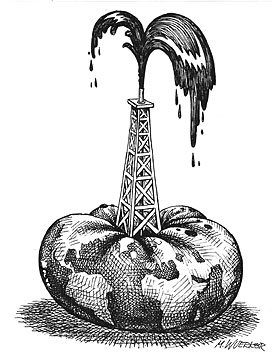
Oil use in rich industrialized countries will never return to 2006 and 2007 levels because of more fuel efficiency and the use of alternatives, the chief economist of the International Energy Agency said on Thursday.
The bold prediction, while made previously by some analysts, is significant because the IEA advises 28 countries on energy policy and its oil demand forecasts are closely watched by traders and policymakers.
"When we look at the OECD countries -- the U.S., Europe and Japan -- I think the level of demand that we have seen in 2006 and 2007, we will never see again," Fatih Birol told Reuters in a telephone interview.
"There may be some zig zags up and down but as a trend I think it will be a downward trend in terms of oil consumption."
Flat or declining OECD demand may ease any strain on oil prices caused by ever-growing consumption in emerging economies. The Organization for Economic Cooperation and Development (OECD) countries will account for 53 percent of world demand in 2010, according to the IEA.
In its January 15 monthly Oil Market Report, the IEA forecast OECD demand would average 45.48 million barrels per day (bpd) in 2010, unchanged from 2009. World demand is forecast at 86.33 million bpd, up from 84.89 million in 2009.
Birol said the economic crisis had played a role in curbing OECD demand but the main reasons were more efficient cars and the increasing use of electricity and gas instead of oil in areas outside transport.
"It did play a role. The recession had a one-off effect," said Birol, who spoke to Reuters from the sidelines of the Davos conference of business leaders. "But the main factors are structural."
CHINA OFFSETS DECLINE
BP Plc Chief Executive Tony Hayward, also in Davos, said on Thursday demand for gasoline would not return to the rate of three years ago in established markets.
"None of us will sell more gasoline than we sold in 2007," he said, referring to developed markets. "That's, however, being offset by very strong ... markets of the East and particularly China."
In China, 13 million cars were sold last year, he said.
Interest in peak demand has grown following the surge in oil prices to a record high near $150 a barrel in 2008, a decline in world demand because of the economic crisis and efforts to combat climate change.
Reuters reported a year ago, citing analysts including the former chief economist at BP Plc, that oil demand may never return to growth in the United States, Europe and parts of Asia.
While non-OECD demand is expected to keep world oil use on a growing trend, some believe global consumption could reach a high point in the next decades as a result of policies to tackle climate change.
Saudi Arabia, which as the world's largest oil exporter has a lot to lose from a decline in oil demand, is worried about future consumption, its lead climate negotiator told Reuters earlier this month.
Muhammed al-Sabban, head of the Saudi delegation to UN talks on climate change, said the possibility that oil demand might peak this decade was a "serious problem" for Saudi Arabia.
Birol did not give any timeframe for any peak global oil demand, but said a move toward more efficient vehicles in developing markets could dampen the expected emerging country growth.
Reuters
Oil use in rich industrialized countries will never return to 2006 and 2007 levels because of more fuel efficiency and the use of alternatives, the chief economist of the International Energy Agency said on Thursday.
The bold prediction, while made previously by some analysts, is significant because the IEA advises 28 countries on energy policy and its oil demand forecasts are closely watched by traders and policymakers.
"When we look at the OECD countries -- the U.S., Europe and Japan -- I think the level of demand that we have seen in 2006 and 2007, we will never see again," Fatih Birol told Reuters in a telephone interview.
"There may be some zig zags up and down but as a trend I think it will be a downward trend in terms of oil consumption."
Flat or declining OECD demand may ease any strain on oil prices caused by ever-growing consumption in emerging economies. The Organization for Economic Cooperation and Development (OECD) countries will account for 53 percent of world demand in 2010, according to the IEA.
In its January 15 monthly Oil Market Report, the IEA forecast OECD demand would average 45.48 million barrels per day (bpd) in 2010, unchanged from 2009. World demand is forecast at 86.33 million bpd, up from 84.89 million in 2009.
Birol said the economic crisis had played a role in curbing OECD demand but the main reasons were more efficient cars and the increasing use of electricity and gas instead of oil in areas outside transport.
"It did play a role. The recession had a one-off effect," said Birol, who spoke to Reuters from the sidelines of the Davos conference of business leaders. "But the main factors are structural."
CHINA OFFSETS DECLINE
BP Plc Chief Executive Tony Hayward, also in Davos, said on Thursday demand for gasoline would not return to the rate of three years ago in established markets.
"None of us will sell more gasoline than we sold in 2007," he said, referring to developed markets. "That's, however, being offset by very strong ... markets of the East and particularly China."
In China, 13 million cars were sold last year, he said.
Interest in peak demand has grown following the surge in oil prices to a record high near $150 a barrel in 2008, a decline in world demand because of the economic crisis and efforts to combat climate change.
Reuters reported a year ago, citing analysts including the former chief economist at BP Plc, that oil demand may never return to growth in the United States, Europe and parts of Asia.
While non-OECD demand is expected to keep world oil use on a growing trend, some believe global consumption could reach a high point in the next decades as a result of policies to tackle climate change.
Saudi Arabia, which as the world's largest oil exporter has a lot to lose from a decline in oil demand, is worried about future consumption, its lead climate negotiator told Reuters earlier this month.
Muhammed al-Sabban, head of the Saudi delegation to UN talks on climate change, said the possibility that oil demand might peak this decade was a "serious problem" for Saudi Arabia.
Birol did not give any timeframe for any peak global oil demand, but said a move toward more efficient vehicles in developing markets could dampen the expected emerging country growth.
Subscribe to:
Posts (Atom)


+of+Copy+of+Scan+Head+Letter3.JPG)
